
CoCIS_Admin
- Posted on
New Computer Science Head calls for more staff and resources to strengthen practical training
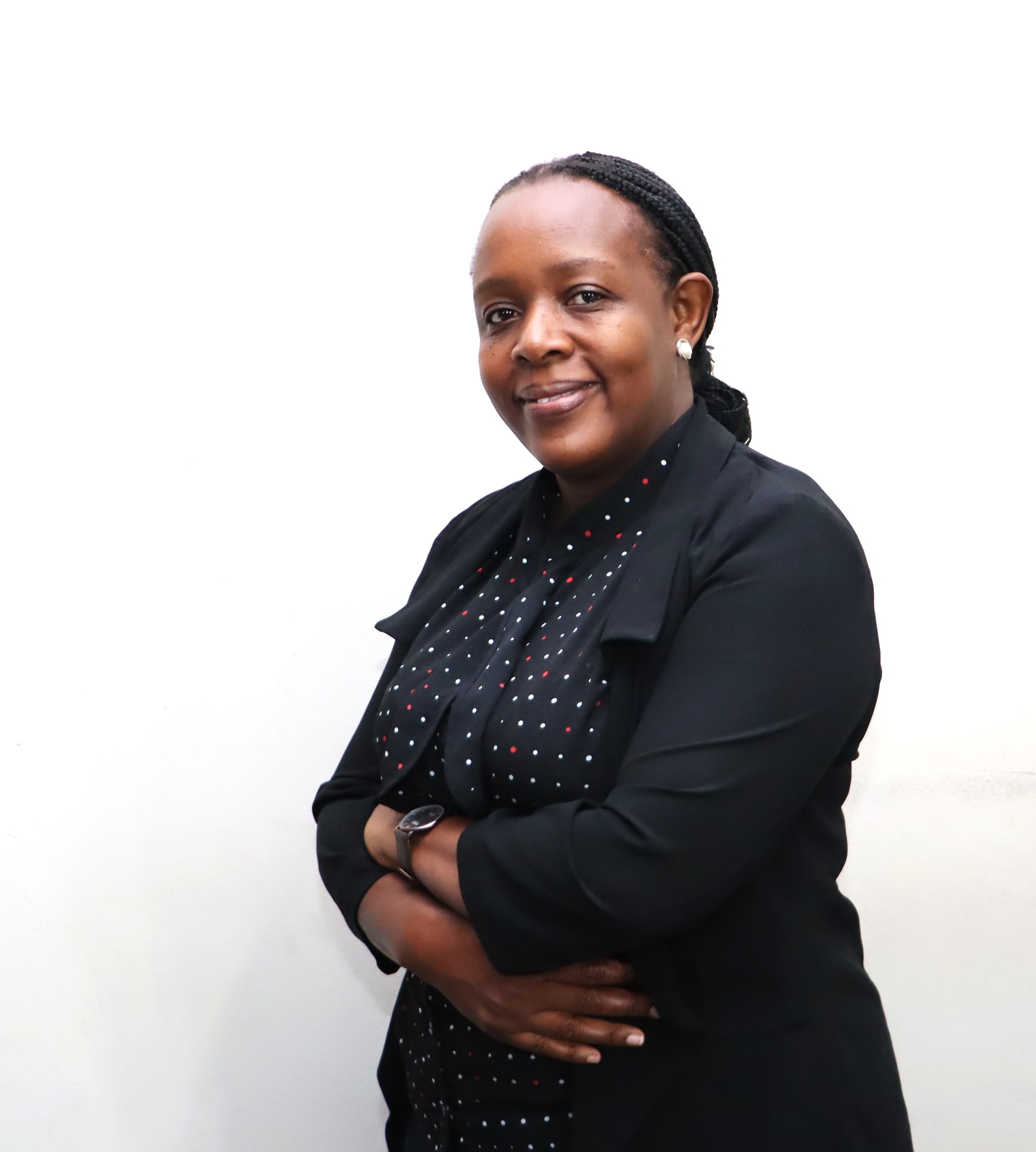
Dr. Marriette Atuhurire Katarahweire, the new Head of the Department of Computer Science, has called for increased staffing, equipment and support for students as the department moves toward more competence-based and practical training.
Atuhurire says her immediate priority is to consolidate the foundation laid by her predecessor, Prof. Engineer Bainomugisha, while improving student completion rates, strengthening research in artificial intelligence and digital security, and ensuring undergraduate students acquire practical programming skills.
She also identified financial constraints among self-sponsored graduate students as one of the factors contributing to delayed completion, saying many students struggle to balance employment, tuition and research.
In this interview, Atuhurire discusses her motivation for taking up leadership, her priorities for the department, challenges facing graduate students, the need for more staff and equipment, and her advocacy for girls in science, technology, engineering and mathematics (STEM).
Q: What gave you the courage to become one of the leaders in the college? What motivated you?
Atuhurire: I think it was the urge to lead and also the mentorship I received, especially from Prof. Engineer Bainomugisha when he was our head. There was that mentorship and, of course, the need to lead—to step in and fill the gap when there is a need.
I have also seen leaders being able to make it, so I thought I should also give it a shot and serve the community.
Q: You have talked about mentorship. Who are some of the people who mentored and inspired you to get involved in leadership?
Atuhurire: I was mentored by Prof. Bainomugisha. He has continued to offer me mentorship, especially when I stepped in as acting head of department.
We also have some ladies who have been in this college and school who have led by example and inspired us. One of them is Prof. Rwashana. She was a deputy principal, but even before that, she had served in different leadership positions. They inspired me to take on leadership.
Q: So far, how is the office?
Atuhurire: The office is busy. You have leadership roles, but you also have time that you need to go to class and teach. So it is busy, but I rise to the challenge.
It is about time management and making sure that I balance everything because I also have a family to take care of. So it is a matter of balancing everything, and of course, God first.
Q: As the new head of department, what are your key priorities? What direction do you want to steer the department?
Atuhurire: I am building on the foundation that has already been laid by a very able leader, Prof. Engineer Bainomugisha. I am stepping into very big shoes.
At the moment, I want to consolidate what is already there and make sure it keeps going. But, of course, I want to ensure that students continue and complete within the timeframe they have been given.
For the master’s students, if we can support them and ensure that they complete within the given time, that is important. The same applies to PhD students.
There is also an emphasis on research. We have been leading in artificial intelligence, but we also need to push for security because that is another area we should focus on—artificial intelligence and digital security.
For our undergraduates, we need to ensure that they are grounded not just in theory but also in practical skills, especially programming.
Q: Student completion has been a persistent challenge at Makerere University. What do you think are some of the bottlenecks behind the problem in the department and college?
Atuhurire: For graduate students, most of them are self-sponsored or private students. That becomes a challenge.
If you have to work and also look for money to pay for your studies, it becomes difficult to balance the two. Mostly, when they finish their coursework and it is time for research, they say, “Let me go and find that money.” Then it becomes a challenge to bring them back.
But I commend the staff because they are able to follow up with students for a whole year until they complete.
Sometimes a student says, “I am looking for money,” and then they take on extra services. Others apply and start with the hope that they will get a scholarship, but the scholarships do not come.
There are also requirements. You need admission to get a scholarship, and you must be a student.
We commend the different organisations that have stepped in and given scholarships. We have Google DeepMind, which has just given scholarships to three master’s students. We also have the Mastercard Foundation supporting master’s and graduate students.
But staff also need to be motivated and supported. When you push a student until they graduate, sometimes you may not get a publication from that work. But pushing the student to graduation is also an achievement.
So staff also need to be remunerated and motivated.
Q: Who is Dr. Marritte outside the office—not as a lecturer or head of department?
Atuhurire: Marritte is a mother, a mother of four—three boys and one precious girl. I have been married for more than 16 years.
I am a Rotarian and a former president of the Rotary Club of Namugongo. I love serving the community, giving talks to people and encouraging young children, especially young girls, to join STEM.
When growing up, you would say, “I want to be an engineer,” and people would laugh at you when you claimed you wanted to be an engineer who climbs poles. You would look at an electric pole and ask yourself, “How will I climb that pole?” Then you pull back.
But once we get into the field, we also see challenges with our students, especially girls. They are told that programming is hard and so on.
I feel strongly about encouraging young girls and telling them that nothing is impossible. If other people can do it, then we can also do it.
I also love reading. I read a variety of books, both fiction and non-fiction. I am a Christian Catholic.
Q: Is there any other information you would like to share with your colleagues, the university or government?
Atuhurire: For our colleagues, let us work together. The Department of Computer Science is a small unit, so we have been working together, helping each other and supporting one another.
But I also request the university to recruit more staff. We are moving towards competence-based training, and this really needs more hands-on training.
We therefore need not only staff but also resources and equipment to equip the laboratories.
Most staff have gadgets that were donated or acquired through projects. When the project ends, they may continue using the same equipment for many years.
So my call to the university is to support staff with equipment, but also support the students.
I also think the government-sponsored places for students are very few. There is the loan scheme and other interventions, but I think they also need to think about expanding support for students.
Dr. Marriette Katarahweire – Profile
Dr. Marriette Katarahweire is a Computer Science academic and researcher at Makerere University with a strong interest in using technology to address real-world challenges, particularly in health, finance, education, and other sectors. She holds a PhD in Computer Science from Makerere University (2023), an MSc in Computer Science from Vrije Universiteit Brussel, Belgium (2008), and a BSc in Computer Science (first class honors) from Makerere University (2005).
Her research focuses on digital security and privacy enhancing technologies for mobile computing, mobile health systems, mobile money and finance, with particular interest in building secure systems from design through development. Her work has contributed to research on mobile health data security, privacy-preserving synthetic data, mobile money and financial fraud detection.
She is passionate about teaching, mentoring especially of girls into STEM, research, and developing practical computing solutions that can improve lives and broaden access to technology.
Dr. Katarahweire is also committed to community engagement through Rotary and has previously led the Computer Science Outreach Programme, supporting efforts to promote awareness and interest in computing among high school students.
By Jane Anyango
Principal Communication Officer CoCIS
