
CoCIS_Admin
- Posted on
Bainomugisha pledges staff-centred leadership at CoCIS, prioritises teaching, research and welfare

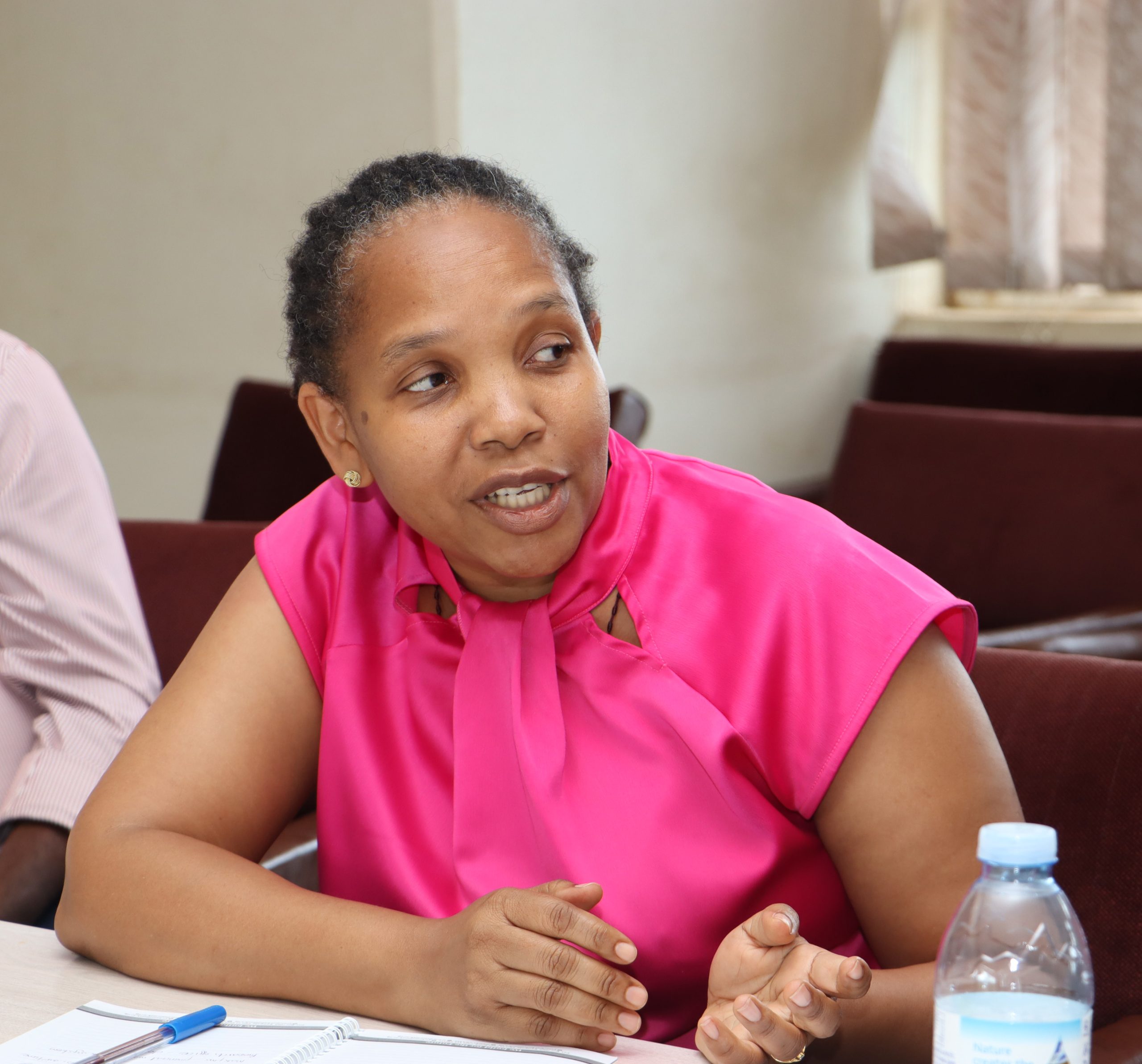
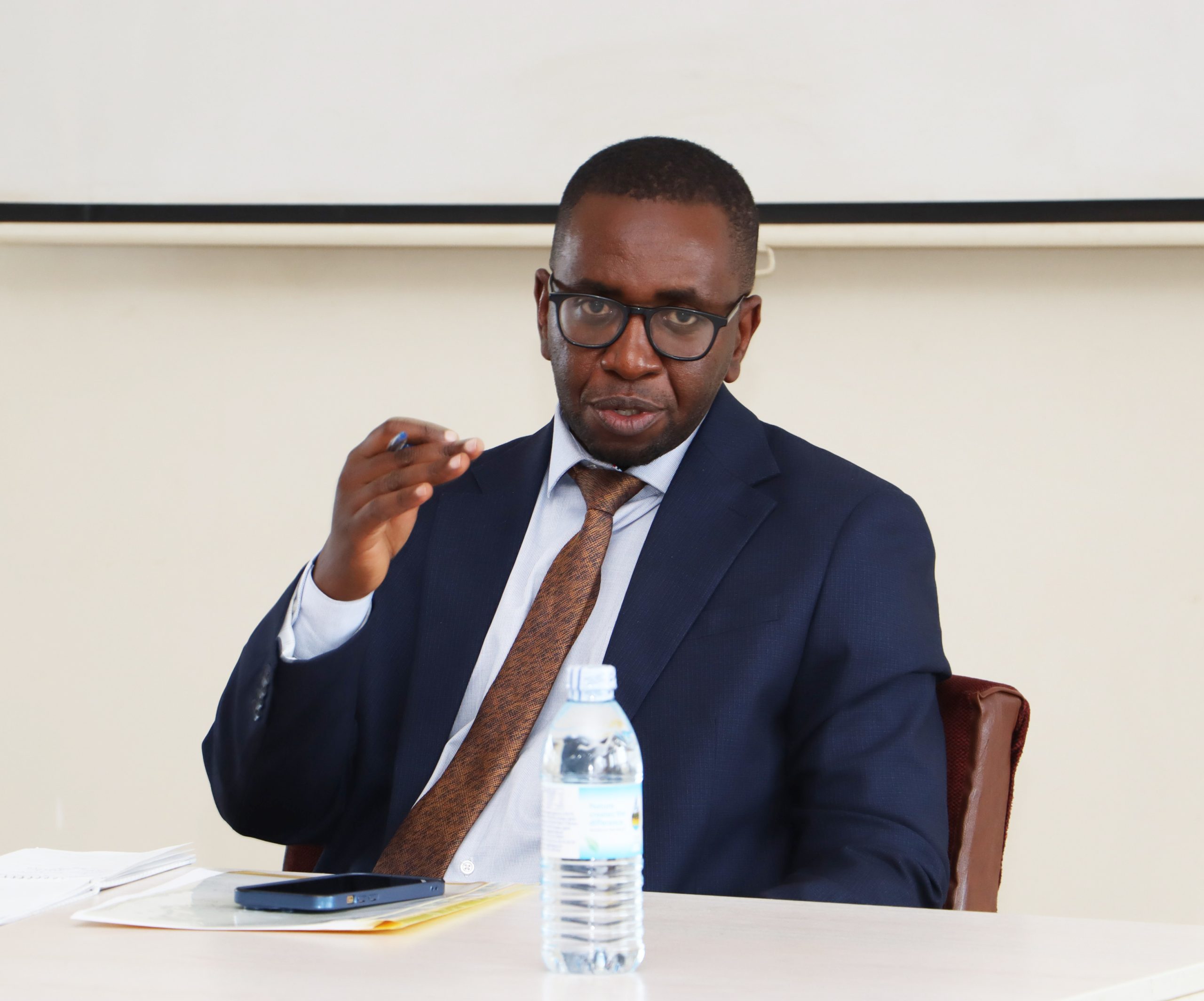
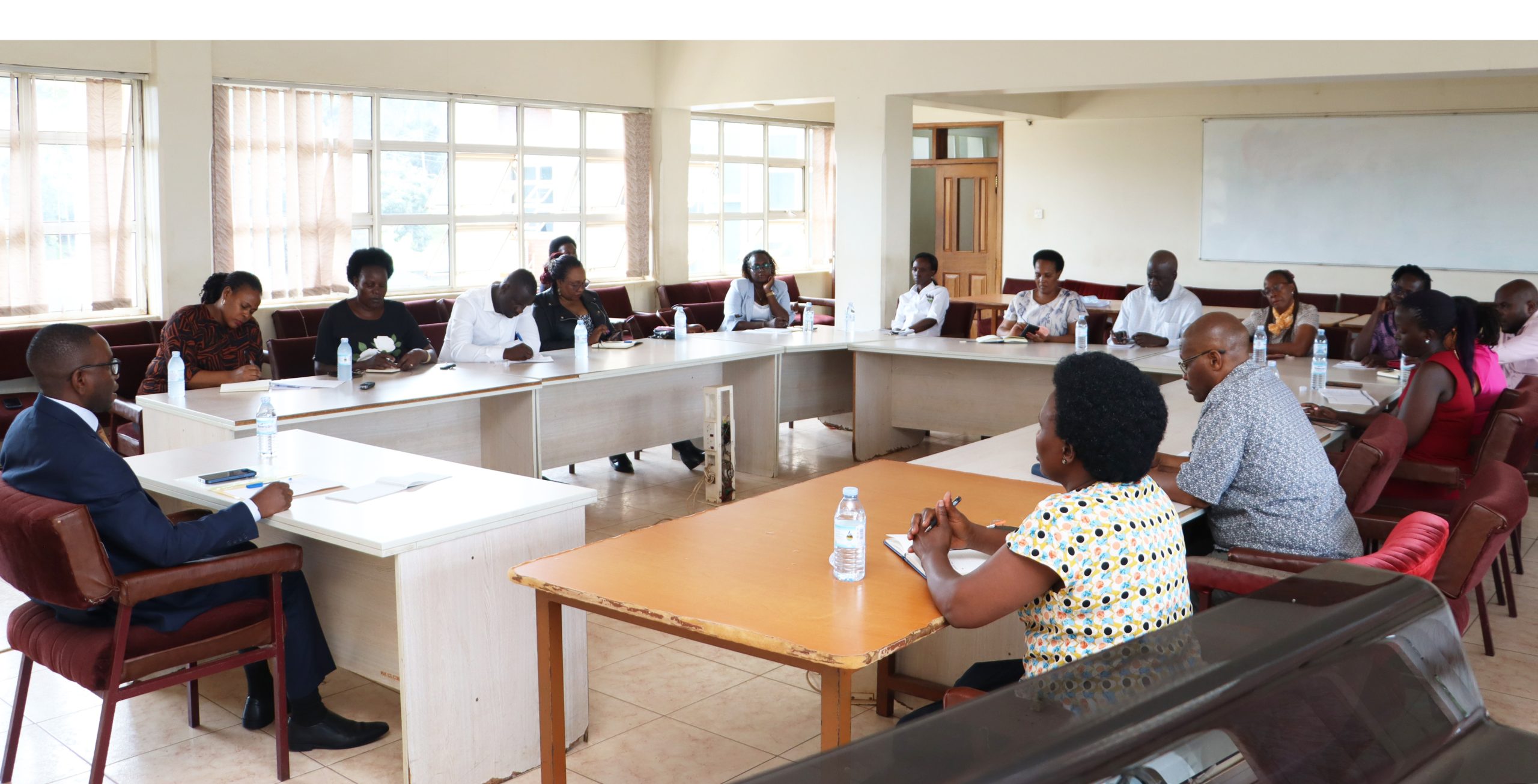
The College Principal calls for stronger administrative support, improved working conditions and regular engagement with staff to advance the college’s strategic priorities.
Makerere University College of Computing and Information Sciences (CoCIS) Principal, Prof. Engineer Bainomugisha, has pledged to strengthen administrative support, improve staff welfare and promote regular engagement as part of his priorities for advancing the college’s teaching, research and innovation agenda.
Speaking at a meeting with administrative staff held on October 1, 2026, in the Conference Room, Prof. Bainomugisha emphasised the critical role of non-teaching staff in achieving the college’s strategic objectives, calling for closer collaboration between administrators and academic leaders.
The meeting, convened less than a month after he assumed office, provided a platform for administrators to share their operational challenges, identify institutional priorities and propose solutions to improve service delivery.
Prof. Bainomugisha thanked staff for making time to attend the meeting despite the demanding academic and administrative calendar, noting that the college was in a particularly busy period of supporting students and university operations.
“I would like to thank you for making the time to have this interaction. It was short notice, and I know that for students, administration and other support functions, this is quite a peak period at the moment,” he said.
He explained that the engagement was part of his initial efforts to understand the college’s administrative structure, familiarise himself with staff and establish how the Principal’s office could support different units to function more effectively.
“As part of my first few days in office, it is really about getting to know the colleagues I have in the college and seeing how we can support each other to move this college forward,” he said.
The Principal said that during his initial visits to staff offices, he had identified several challenges, including inadequate furniture, infrastructure limitations, shortages of printers and other essential resources, as well as specific operational needs across departments.
He said he had documented the concerns and was working with relevant offices to identify interventions, adding that some minor issues were already being addressed.
Teaching excellence, research and staff welfare top priorities
Outlining his vision for the college, Prof. Bainomugisha identified teaching excellence, research and innovation, research impact, a supportive working environment and contribution to Uganda’s digital economy as key priorities during his tenure.
He said the college should produce graduates equipped not only with academic qualifications but also with practical skills and knowledge that enable them to contribute meaningfully to society and the economy.
“I would like to see that the students who graduate from this university have more than a degree. They can speak to what they can do,” he said, emphasising the need to strengthen the skills and competencies students acquire during their training.
On research and innovation, he called for the college to identify and develop specialised research areas in which it could establish a distinct identity, rather than spreading its efforts across too many fields.
“We don’t want to be known for everything. I think we must be good at some things, and we need to define our research areas,” he said.
He further underscored the importance of translating research into practical solutions that benefit communities and contribute to national development, particularly in supporting Uganda’s ambition for tenfold economic growth through digital transformation.
The Principal also identified staff and student welfare as a priority, noting that a conducive and welcoming working environment was essential for effective teaching, research and service delivery.
He stressed that achieving these objectives would require the active participation of administrative and support staff, including human resources, finance, procurement, communications, library and research support functions.
“My main message is that your function is very critical to the success of each of these areas. Without you, we cannot talk about success,” he said, pledging to support staff in addressing challenges that fall within the college’s mandate.
He encouraged administrators to provide candid feedback, noting that while not every concern could be addressed immediately, documenting and prioritising the issues would enable the college to develop interventions over the coming quarters and years.
Staff welcome inclusive leadership and opportunity to air concerns
CPA Francesca Angida appreciates recognition of administrative staff
CPA Francesca Angida welcomed the Principal’s decision to convene the meeting, describing it as an important gesture towards recognising the contribution of administrative and non-teaching staff, whose roles are sometimes overshadowed by those of academic staff.
She noted that the engagement made administrative staff feel valued and acknowledged their contribution to the college’s teaching, research and innovation functions.
“I appreciate this kind of leadership when you really make us feel important, including the administrative and non-teaching staff. Much attention has been given to teaching staff, but I am glad that you have recognised our category of staff and the impact of our work,” she said.
College Registrar highlights student records management challenges
The College Registrar, Ruth Eteu, commended the Principal for creating an opportunity for administrators to express their concerns, noting that she had not experienced a similar meeting since joining the college.
She highlighted challenges in managing student records, including inadequate storage space, the absence of a proper archival system and dependence on a single staff member to maintain and update student files.
Eteu said the limited space available for records had resulted in files being kept in boxes, making retrieval difficult and exposing important institutional documents to potential risks.
“Students’ records are what make us what we are,” she said, calling for expanded registry space, improved records management systems and a balance between physical and digital archiving.
She also raised concerns about delays in processing academic programmes, student registration, supplementary examination reports and graduation lists, attributing some of the challenges to late submissions and delays in obtaining approvals from academic units.
She called for a clear institutional calendar to guide the submission of academic information and ensure that administrative units were given adequate time to fulfil their responsibilities.
Eteu further expressed concern about inconsistencies in the advertisement of academic programmes, particularly at graduate level, where programmes were sometimes advertised without sufficient consultation with the relevant academic and administrative offices.
In response, Prof. Bainomugisha said the college would follow up on the proposed improvements to student records management, including reviewing options for physical and digital filing.
He also called for a coordinated schedule for academic activities, including admissions, examinations and graduation, to minimise last-minute pressure on administrative staff.
“We need to come up with a schedule and write things out, so that we know what is expected and when,” he said, emphasising the need for closer collaboration between the registry and academic leadership.
The Principal said the concerns regarding programme advertisements and admissions processes would also require further discussion with the relevant offices.
College Librarian seeks clarity on administrative support
The College Librarian at the East African School of Library and Information Science (EASLIS) welcomed the engagement, highlighting challenges relating to institutional identity, inadequate resources, limited furniture and low student participation in library training programmes.
The librarian said uncertainty about whether the college library fell under the college or the central university library had affected access to administrative support.
“I have been here for five years, and I have never known where I belong. When I go to ask for something, they tell me to go to the library, and when I go to the library, they tell me I should ask the college,” the librarian said.
The librarian noted that the college library played an essential role in supporting teaching, learning and research through information literacy training, research visibility and the provision of academic resources.
However, limited furniture, inadequate operational funding and low participation in online training sessions had constrained its ability to deliver these services.
The librarian proposed organising physical training sessions for graduate students, integrating library activities into college research seminars and establishing a College Library Board to strengthen coordination and guide the development of library services.
In response, Prof. Bainomugisha clarified that the College Librarian was a recognised member of the college under its statute and assured the librarian of the college’s support.
He encouraged the library to document its resource requirements for consideration in the college’s prioritisation process.
On the proposed library board, he advised the librarian to submit a formal request, including proposed membership and terms of reference, to facilitate its establishment through the appropriate institutional procedures.
He also proposed integrating library training into existing research seminars to improve student participation and make better use of available resources.
PR calls for more communication resources and institutional reporting framework
The Principal Communication Officer for CoCIS who also serves the College of Humanities and Social Sciences (CHUSS), Jane Anyango, called for increased investment in communication resources, additional human capacity and stronger institutional collaboration to improve the visibility of research, innovation and community engagement.
Anyango said the communication function was significantly constrained by limited staffing, noting that she was the only communication officer serving a college with more than 20 units.
She appealed to the Principal to advocate for greater recognition of administrative and support staff at university management level, emphasising that their contributions were essential to the successful implementation of the university’s strategic objectives.
“I would request that in those top management meetings, you sound the same message that administrative and support staff are very important in supporting teaching, research and other activities,” she said.
She also highlighted the lack of essential communication equipment, including cameras, audio recorders and portable digital tools, which had limited the office’s ability to provide real-time event coverage and timely institutional communication.
Anyango further raised concerns about difficulties in obtaining staff profiles, research publications, innovations and community engagement information for publicity and institutional reporting.
She said that despite the availability of a staff profiling tool on the college website, limited cooperation from some staff had affected the collection of information needed to showcase their work and enhance the college’s visibility.
With the annual reporting period approaching, she called for a formal reporting framework that would require departments and schools to regularly submit information about their activities, outputs and achievements.
“Reporting should not be seen as a communication issue. It should be an institutional responsibility where heads of departments and deans provide accountability for what has happened,” she said.
She also proposed regular staff engagement forums and an end-of-year gathering to strengthen relationships and encourage interaction among administrative and support staff.
In response, Prof. Bainomugisha agreed on the importance of institutional visibility, emphasising the need for the college to proactively communicate its achievements.
“We need to tell our story. As a university and as a college, many things might be happening. If you don’t tell our story, they will tell it for you,” he said.
He pledged to support the communication function and proposed strengthening the collection of information at departmental level, with heads of departments playing a more active role in submitting publications, research outputs and other achievements.
He also acknowledged concerns about workload and inadequate resources, noting that the college would document these needs and identify areas for intervention.
The Principal welcomed the proposal for broader staff engagement, saying he had already held discussions with other staff categories and that the concerns raised would be followed up.
Grants Officer seeks regular engagement with administrators
The College Grants Officer, Dora Bapangana, thanked the Principal for convening the meeting, describing it as an important platform for administrators to share challenges and propose improvements.
She sought clarification on whether the meetings would become a regular feature, noting that continued engagement would give staff an opportunity to prepare and present issues that might not have been captured during the inaugural meeting.
In response, Prof. Bainomugisha said he intended to maintain regular contact with administrative staff, although the frequency and structure of the meetings were yet to be determined.
“I would like, as much as possible, to ensure that we have some of these regular check-ins. The schedule is not yet clear, but the spirit is that we should be in regular contact,” he said.
He added that some concerns would also be addressed through existing college management structures and other scheduled meetings, while assuring staff that his office remained open to further engagement.
Accountants raise workload and financial management system concerns
Michael Hajusu calls for workload review and staff interaction
Assistant Accountant Michael Hajusu welcomed the meeting, noting that although finance staff regularly interacted during quarterly budget allocations, administrators had rarely had an opportunity to engage collectively at this level.
He highlighted workload challenges in the finance function, explaining that he had previously been responsible for multiple financial and committee-related activities, including payments, expenditure management and asset management.
Hajusu also raised concerns about inadequate training in the Integrated Financial Management System (IFMS), particularly in asset management, saying staff had initially been expected to learn the system independently.
“When the module was introduced, we were never trained. They just gave us the modules from the ministry and told us to read,” he said, adding that he had acquired the necessary skills through practice and experience.
He called for more staff interaction outside formal administrative structures, proposing an end-of-year gathering to enable staff to share experiences and strengthen teamwork.
Hajusu also explained some of the procedural challenges associated with the Makerere University Financial Management System (MakFMS), particularly the approval and uploading of financial requisitions.
Prof. Bainomugisha acknowledged the workload concerns and said the college needed to protect staff time to improve efficiency.
He noted that administrative staff were often stretched by responsibilities extending beyond their primary assignments and said the college would engage the relevant human resource offices to explore possible solutions.
“The important thing we are asking of HR is that we need to protect the time of our staff for us to be efficient,” he said.
Sarah Nabawanuka highlights delays in payment processing
Assistant Accountant Sarah Nabawanuka raised concerns about the financial management system’s payment approval process, particularly instances where requisitions approved by the Principal were not promptly initiated on the system by the requesting departments.
She explained that such delays could create the impression that the accounts office was responsible for outstanding payments, even when the requesting units had not completed their part of the process.
She proposed that requesting departments should initiate and submit their requisitions through the system after obtaining the required approvals, before forwarding them to accounts for processing.
Prof. Bainomugisha acknowledged the procedural challenges, noting that the process appeared to involve repeated steps that could affect efficiency.
He committed to holding further discussions with the accounts team to review the workflow, clarify responsibilities and identify ways of streamlining the payment process.
Graduate coordinator raises concerns over staff contracts and operational supplies
The Graduate Coordinator, Lillian Ayebare, highlighted challenges affecting graduate programme administration, including shortages of printing paper and toner, delayed staff payments and uncertainty surrounding contract renewals.
She noted that the graduate coordination function relied on collaboration among several administrative units, including the registry, finance, research office and communications, to support graduate students and facilitate academic activities.
Ayebare expressed concern that some staff employed by the college experienced months of delayed payment, particularly around the Christmas period, while uncertainty over contract renewals affected their employment stability.
“Sometimes you work and you are not sure whether your contract will be renewed or what is going to happen,” she said, appealing to the Principal to prioritise timely payments and address contract-related concerns.
She also requested that essential office supplies, particularly printing paper and toner, be made available ahead of peak academic periods to prevent disruptions to administrative operations.
In response, Prof. Bainomugisha acknowledged the concerns and said the college was exploring options to improve access to operational space for research-related activities. He also undertook to follow up on the procurement of toner and other essential supplies with the relevant offices.
On delayed payments and contract issues, he emphasised that staff should not be expected to provide services without timely remuneration, describing the matter as a priority for the college.
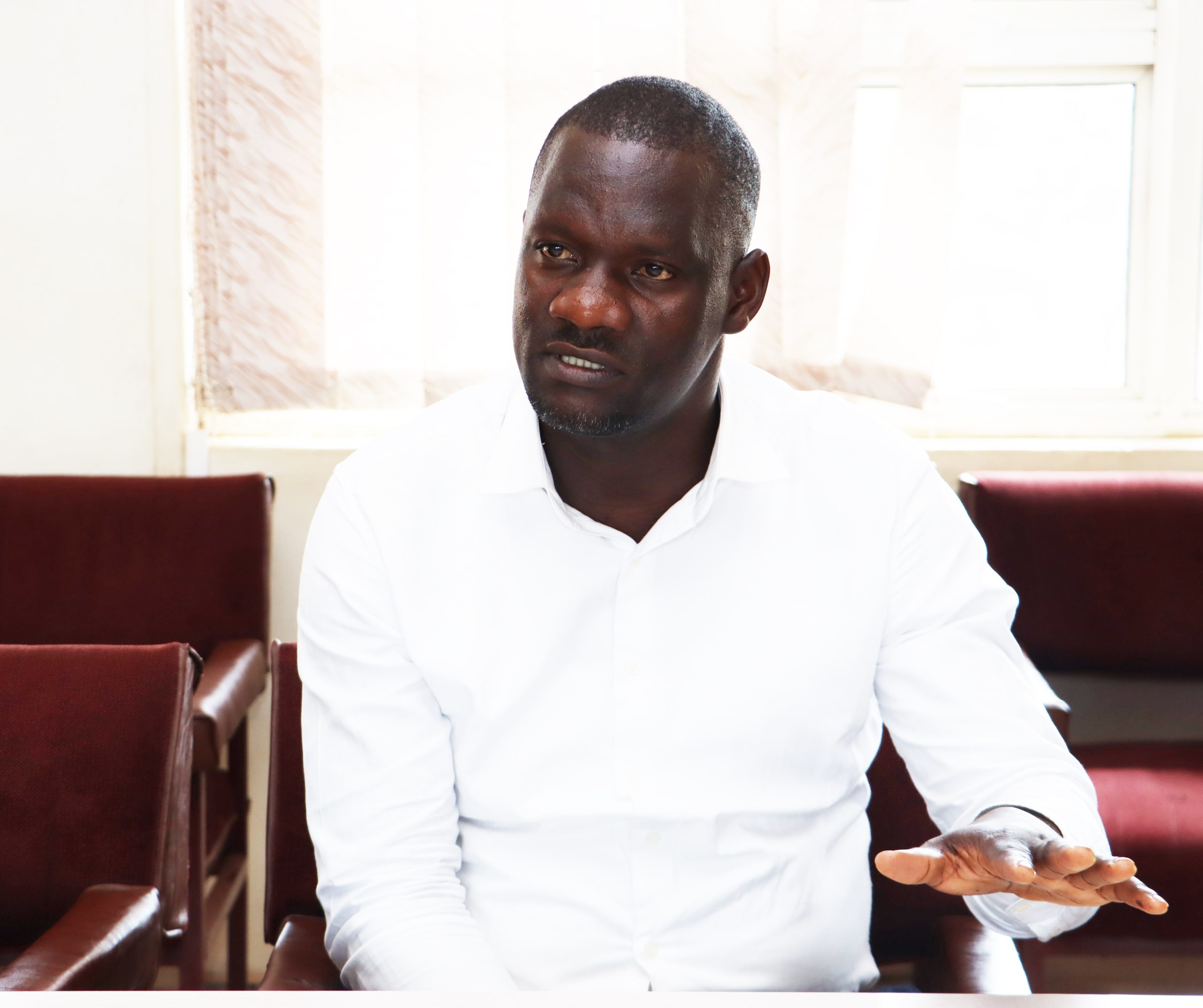
Procurement officer calls for timely requisitions and transition to e-procurement
The College Procurement Officer, David Ikoma informed staff about the university’s transition from the manual procurement system to an electronic government procurement platform, known as EGP 2.0.
He urged administrative units to submit procurement requisitions in good time, explaining that late requests often disrupted procurement planning and affected the timely delivery of services.
“Sometimes you bring your requisitions late. You want lunch or food for a meeting tomorrow, yet you submit the request in the evening,” he said, emphasising the need for departments to plan ahead.
Ikoma also highlighted resource constraints affecting the procurement of office supplies, particularly toner cartridges for printers that require multiple colour cartridges and are expensive to maintain.
He explained that limited quarterly allocations had affected the ability of the college to meet the needs of all administrative offices, with some units having to borrow supplies from other colleges.
He noted that procurement delays had also been affected by financial system approval procedures and the transition to new administrative processes.
Prof. Bainomugisha acknowledged the challenges associated with the introduction of new systems, including MakFMS and EGP 2.0, and said staff would need to familiarise themselves with the new procedures.
He encouraged administrators to improve coordination with the procurement office and submit requisitions early enough to allow for proper planning and processing.
HR officer highlights staffing shortages across administrative units
The College Human Resource Officer, Julius Lebo, described staffing shortages as a major challenge affecting the delivery of administrative services, noting that the existing human resource structure had left some officers responsible for multiple units.
Lebo said he was handling human resource matters for 14 additional offices, making it difficult to provide adequate support across all the units under his responsibility.
He explained that the staffing challenge had persisted despite repeated discussions in different institutional forums, with structural limitations and negotiations with the Public Service complicating efforts to recruit additional personnel.
“The way we think about it is that it is a temporary arrangement, but the concern is that if the existing structure is changed, we may not be able to get those positions back,” he said.
He also highlighted the contribution of interns who supported human resource operations, noting that some had acquired considerable experience but were not receiving remuneration beyond lunch.
Lebo appealed for institutional support to retain and facilitate the interns, given the significant workload handled by the HR office.
In response, Prof. Bainomugisha said workload and staffing constraints were among the issues he intended to raise with the Chief Human Resource Officer during a scheduled meeting.
He acknowledged that the existing staffing arrangements placed considerable pressure on administrative personnel and emphasised the need to identify ways of distributing responsibilities more effectively.
The Principal also reiterated that the college would continue engaging relevant university offices to address staffing and workload concerns.
Principal pledges follow-up on staff concerns
In his closing remarks, Prof. Bainomugisha reiterated his commitment to maintaining an open and collaborative working relationship with administrative and support staff, stressing that the meeting was intended to generate practical solutions rather than merely provide an opportunity to air grievances.
He said the concerns raised, including staffing shortages, inadequate infrastructure, resource constraints, delayed payments, records management and inefficient administrative processes, would be documented and prioritised for follow-up.
The Principal emphasised that feedback should remain an ongoing process and encouraged staff to continue engaging his office and relevant unit heads whenever challenges arose.
“Feedback is a gift. It might not always be positive, but as a college, we need to create an environment where we are open to receiving feedback from all stakeholders, whether students or fellow staff,” he said.
He reiterated his commitment to working with all administrative and academic units to advance the university’s and college’s strategic plans, noting that achieving teaching excellence, research impact, innovation and staff welfare required collective responsibility.
He further welcomed proposals for more opportunities for staff interaction, including an end-of-year gathering, and said the college would explore ways of supporting such initiatives.
Prof. Bainomugisha concluded by thanking the administrators for their participation and continued service to the college, reaffirming that the Principal’s office would remain accessible to staff as they worked together to improve institutional performance and service delivery.
Story by Jane Anyango- Communication Officer
Photo credits: Peninah Nalubega, 4th-year Journalism and Communication student