CoCIS_Admin
- Posted on
Prof. Nawangwe Rallies CoCIS to Scale up more PhDs for Global Leadership
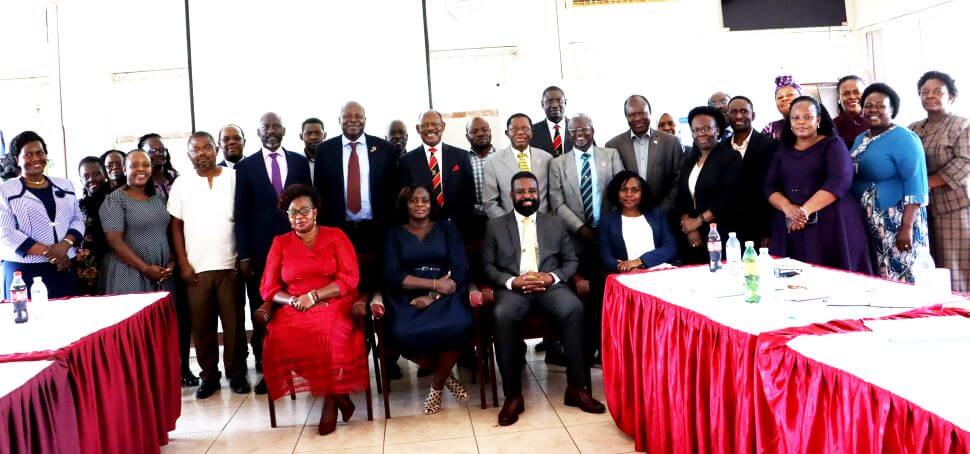
A group photo of the VC and CoCIS staff after the meeting
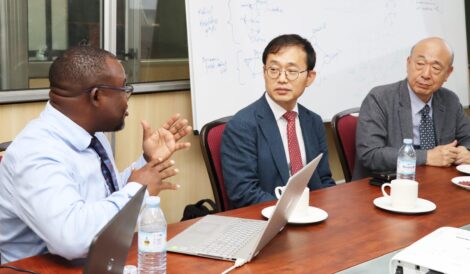
The Vice Chancellor of Makerere University, Prof. Barnabas Nawangwe, has asked staff in the College of Computing and Information Sciences (CoCIS) to increase the production of PhD to meet continental demands. Speaking during a high-level management meeting with the college staff , Prof. Nawangwe emphasized that the university is turning towards a reward-based system for departments that successfully scale their doctoral output while maintaining rigorous standards.
“Now, as you heard what World Bank is telling us, and if you see what is happening in China, for us we are going to reward those departments which churn out more PhDs. But I agree that there must be quality PhDs,” Prof. Nawangwe stated. “That’s the only thing. As far as I’m concerned, in CoCIS, you are so well-staffed, you have the capacity to double the number of PhDs you are currently admitting. I hope you are not throwing out people claiming you don’t have capacity”.
The Vice Chancellor further noted that the transformation of the African continent hinges on the generation of skilled labour that can lead globally rather than being relegated to menial roles abroad. “We don’t want our children to go out there to be slaves again. Let them go there when they have skills and lead the world. So, it is a challenge to us as our generation… to transform this continent, to free it from mental slavery and from marginalization,” he added.
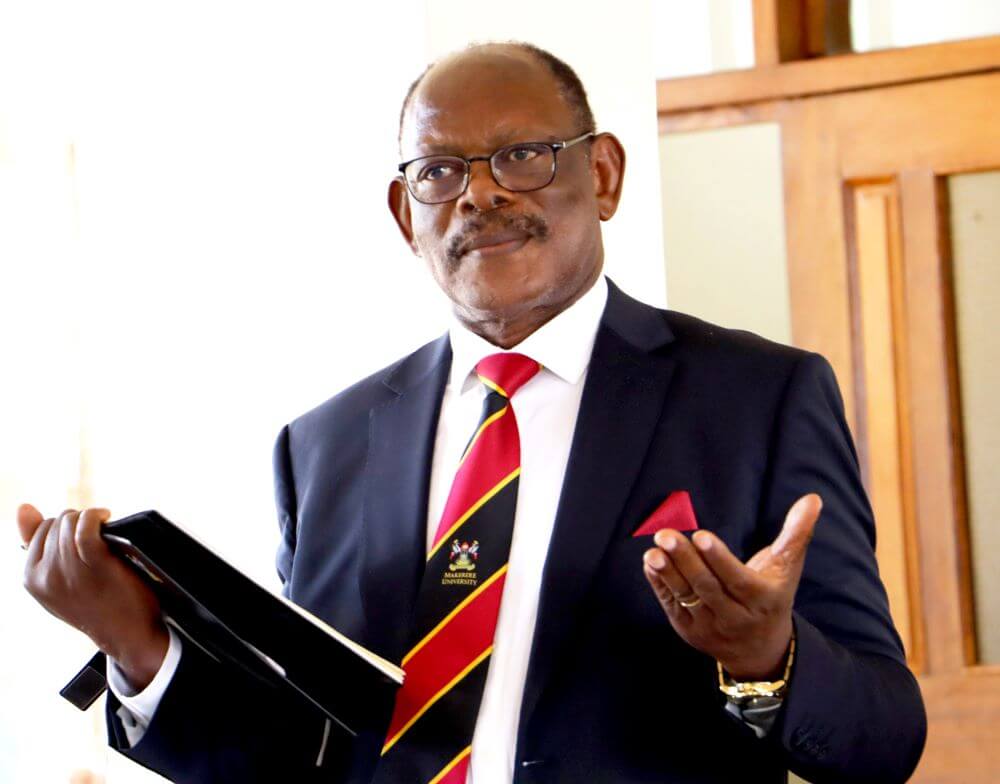
Prof. Barnabas Nawangwe addressing staff at CoCIS
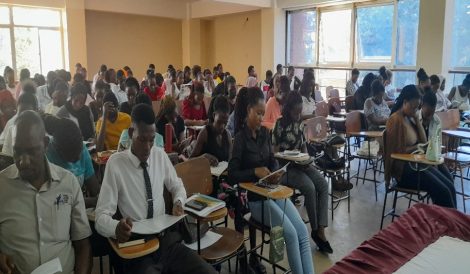
The Vice Chancellor’s visit to CoCIS was part of his university wide tour to colleges to understand and discuss the status of research and graduate training and also enlighten staff on the university’s initiatives towards a research led university. He was accompanied by The Academic Registrar, Director Quality Assurance, Directors from DRGT, Coordinator Makerere University Writing centre, Coordinator GAMSU, Managing Editor Mak Press and representatives from MUTIC among others
A global mandate for knowledge production
Prof. Nawangwe pointed out that Africa currently produces only 3% of global knowledge. To combat poverty and drive prosperity, the World Bank has set a target for the continent to produce one million PhDs within a decade, a goal that was set in 2020 but remains far from being met.
China, by comparison, is now outproducing the United States in PhD output annually, a factor directly linked to its rapid economic prosperity. Nawangwe argued that Makerere, as one of the few institutions on the continent with the capacity to train at this level, must lead the charge. He noted that Makerere already possesses a formidable human resource base, with 1,200 staff members holding PhDs.
“If each one of these PhDs supervised another two PhDs, we would be having 2,400 PhD students,” Nawangwe observed, noting that current numbers fluctuate between 600 and 800, suggesting that the university’s capacity is not yet fully utilized. This human resource is not only an academic asset but a financial one; Makerere’s researchers bring in over $250 million annually through grants, making the university one of the largest foreign exchange resources for Uganda.
CoCIS position and status
The Principal of CoCIS, Prof. Tonny Oyana, highlighted the college’s unique position at the center of the university’s digital and multidisciplinary agenda. CoCIS is currently structured into two schools- the School of Computing and Informatics Technology and the East African School of Library and Information Science (EASLIS), with 17 graduate programs spanning PhDs, Masters, and Postgraduate Diplomas.
Prof. Oyana further revealed that by 2026, CoCIS had produced a cumulative total of 66 PhD graduates, including a record 13 graduates in 2026, the highest annual output in the College’s history. He said the achievement reflects CoCIS’s commitment to nurturing a vibrant research culture and contributes significantly to Makerere University’s aspiration of becoming a leading research-led institution.
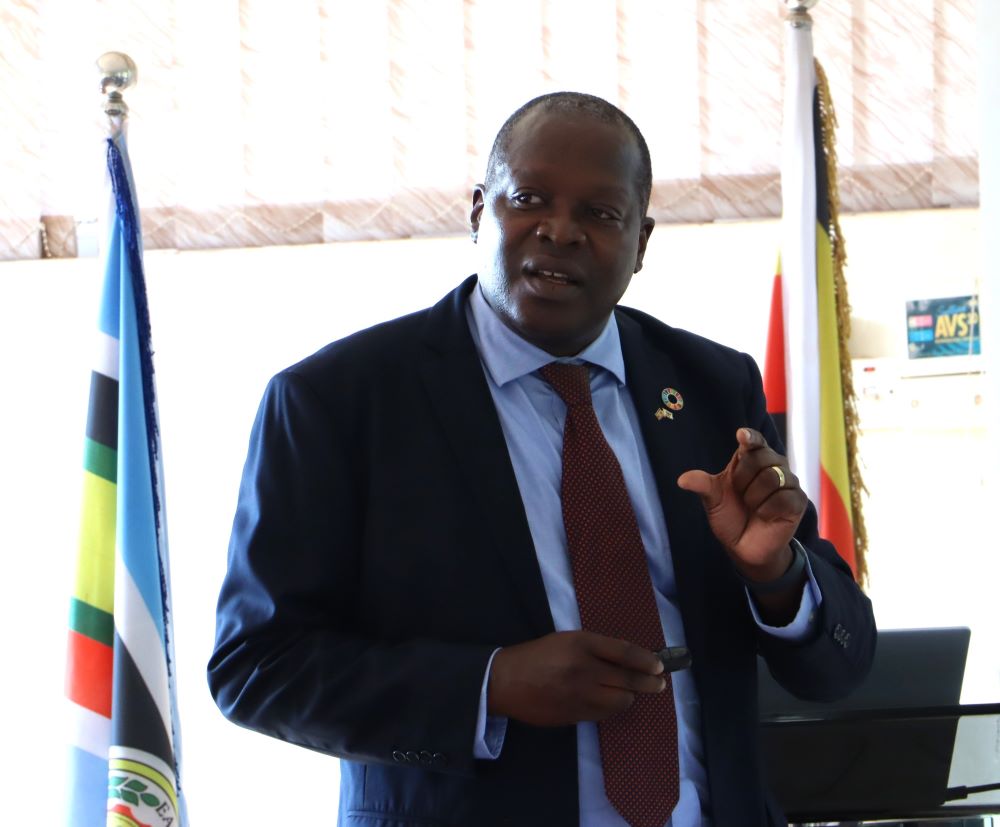
The Principal of CoCIS, Prof. Tonny Oyana addressing people during the meeting
Prof. Oyana showcased the college’s successful “miraculous recovery” from staff exoduses in 2012, noting that the faculty is now diverse, with members trained in India, America, Europe, and across Africa. To bolster research, the college introduced the Research Innovation Skills Enhancement (RISE) Fund in 2018, which facilitates graduate training and research support. This initiative has funded seed grants totalling approximately 870 million shillings, yielding significant returns in external funding, such as a natural language processing project that attracted $200,000.
Prof. Oyana reported that a significant portion of graduate students are self-sponsored, struggling to balance full-time jobs with intensive research. He appreciated the university grant structure proposing improvement in “pre-service” support to help researchers with the complex paperwork and idea generation required before a grant is even won.
“Grants depend on your evidence. Some grants require you to have data. You cannot be competitive if you don’t have the evidence,” Oyana explained, suggesting that Makerere must be more intentional in funding long-term, five-year projects in core areas like health and agriculture where the university already has a competitive edge.
Structural Reforms in Graduate Training
The Director of the Directorate of Graduate Training, Assoc.Prof. Julius Kikooma, briefed the meeting on two major reforms: a shift to a cohort-based PhD admission system, with two intakes a year requiring dedicated coordination at department level, and the rollout of a new Research Information Management System (RIMS) designed to plug gaps in the university’s existing academic records system by tracking student progress in real time. Kikooma urged supervisors to register accounts and log student interactions on the platform. He also invited staff to respond to a survey conducted under the Alliance for African Partnership examining graduate training across supervisors, administrators and students. Prof. Kikooma appealed to academic staff to fully embrace the digital tracking tools.
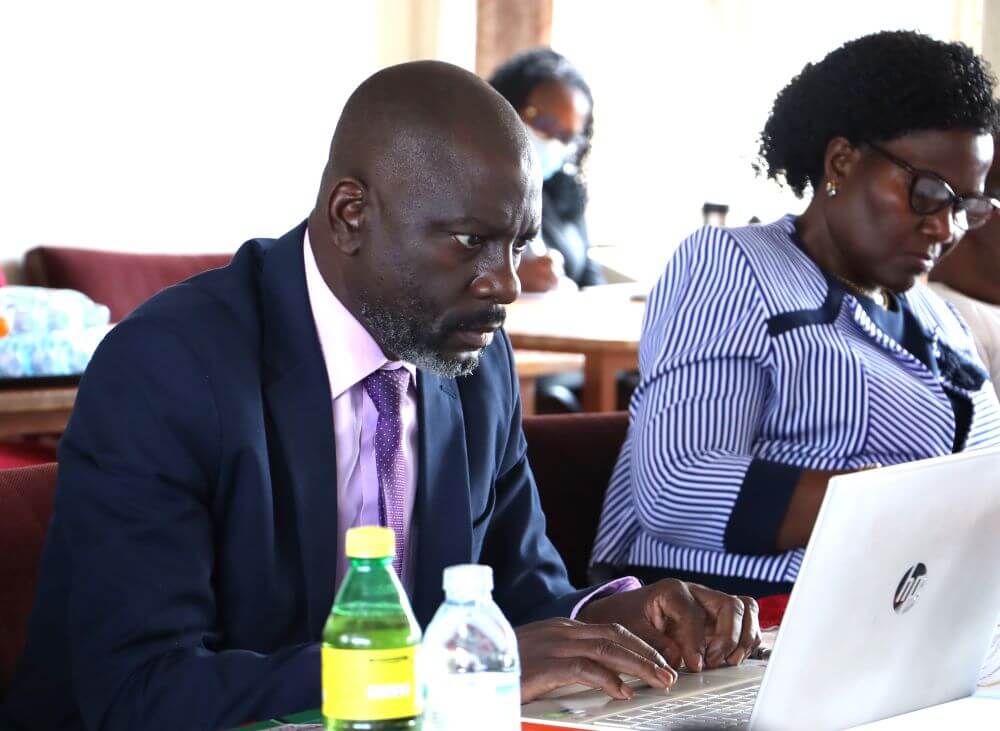
Assoc.Prof. Julius Kikooma
The Director of the Directorate of Research, Innovations and Partnerships (DRIP) Prof. Robert Wamala outlined six priority areas for strengthening research beyond graduate training alone: research ethics and integrity, including a push for a dedicated research ethics committee for computing-related and AI-driven studies; management of active partnerships beyond mere signing of memoranda; innovation and technology transfer; research infrastructure mapping across colleges; dissemination through better-managed conferences; and community engagement, which he said requires additional effort of the university’s three core mandates of teaching, research and outreach.
Publishing in high impact -indexed journals and revival of home-grown journals
Dr. Cyprian Misinde, the Director Quality Assurance emphasized that for Makerere to rise in global rankings, its research must be published in high-impact, indexed journals. He reported that the university council had resolved that staff should publish in indexed journals rather than obscure, non-indexed outlets, while also tasking management with developing credible home-grown journals.
“When you publish in non-indexed journals, you will not be known worldwide,” Dr. Misinde warned.
He also described a new plagiarism-screening system available to staff preparing for promotion, and a performance and quality-indicators framework being rolled out to track mentorship, supervision and completion rates at every level of the university. He recalled that that Makerere had pioneered competence-based education in the region as far back as 2010, predating the national directive now compelling universities to adopt it.
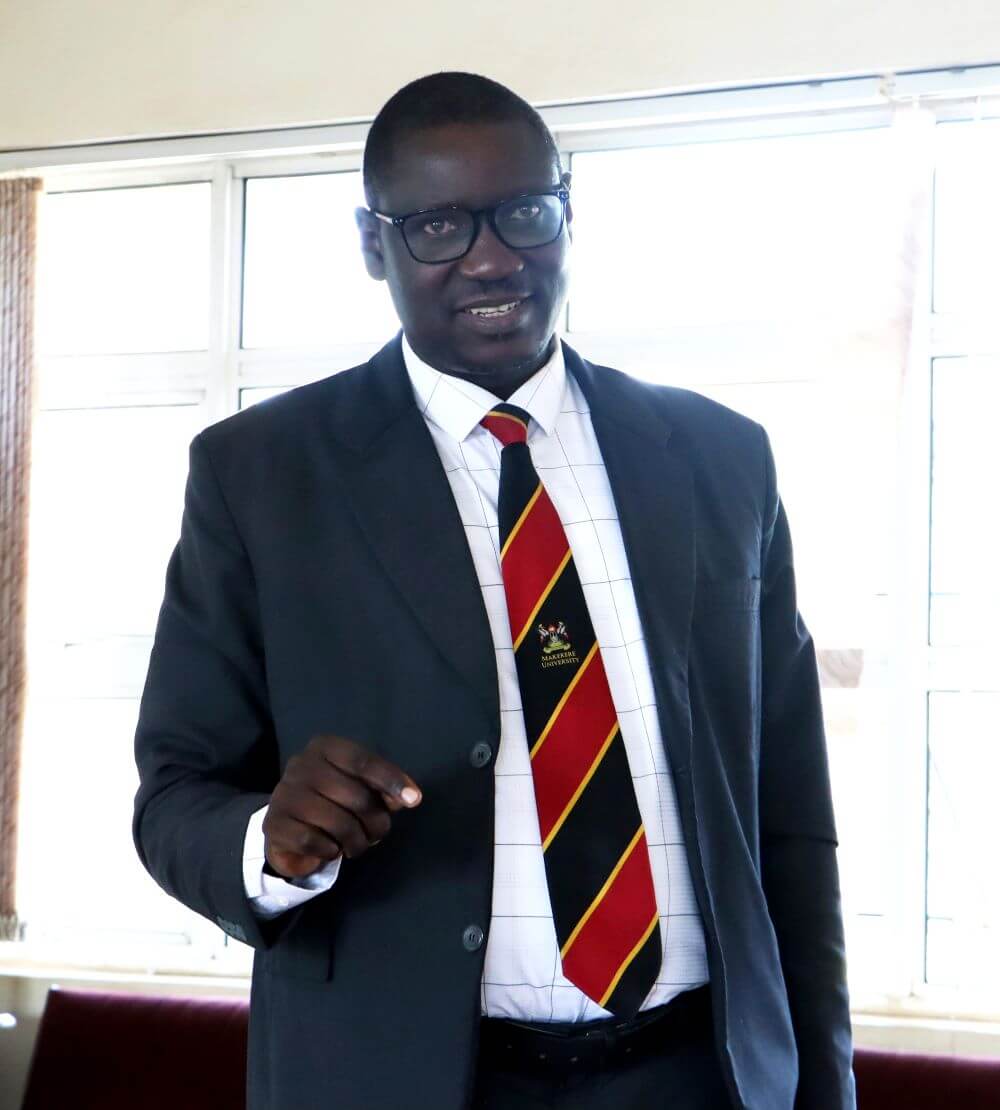
Dr. Cyprian Misinde, the Director Quality Assurance
Dr. Misinde revealed that the university has developed a framework for performance and quality indicators (KPIs) to track everything from student completion rates to mentorship processes. The directorate has also implemented efficient, online plagiarism and integrity checks to ensure the quality of every publication.
Assoc. Prof. Tayeebwa from Makerere University Press invited the faculty to revive the college’s journals. The Press has been mandated by the Vice Chancellor to resurrect “dying” journals and provide them with the technical support needed for international indexing, including the provision of Digital Object Identifiers (DOIs).
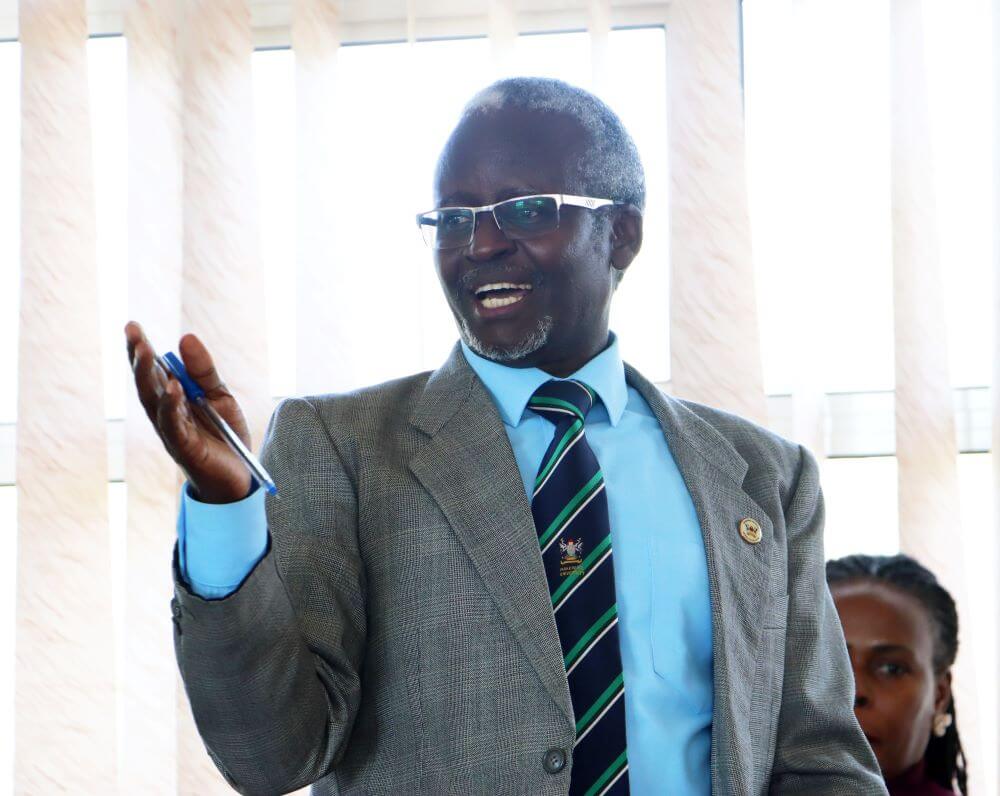 Assoc. Prof William Tayeebwa
“We are here to say that all our journals… [the] Press has now capacity to work with you… and make sure that all your journals are on their way to being indexed,” Tayeebwa stated.
Prof. Fredrick Muyodi -the coordinator of the Makerere University Writing Centre, a unit established late last year under DRIP, said it was building a network of peer mentors across colleges to support undergraduate and postgraduate students, as well as senior researchers, in writing manuscripts, theses and grant applications, in partnership with writing-centre practitioners in the United States and South Africa.
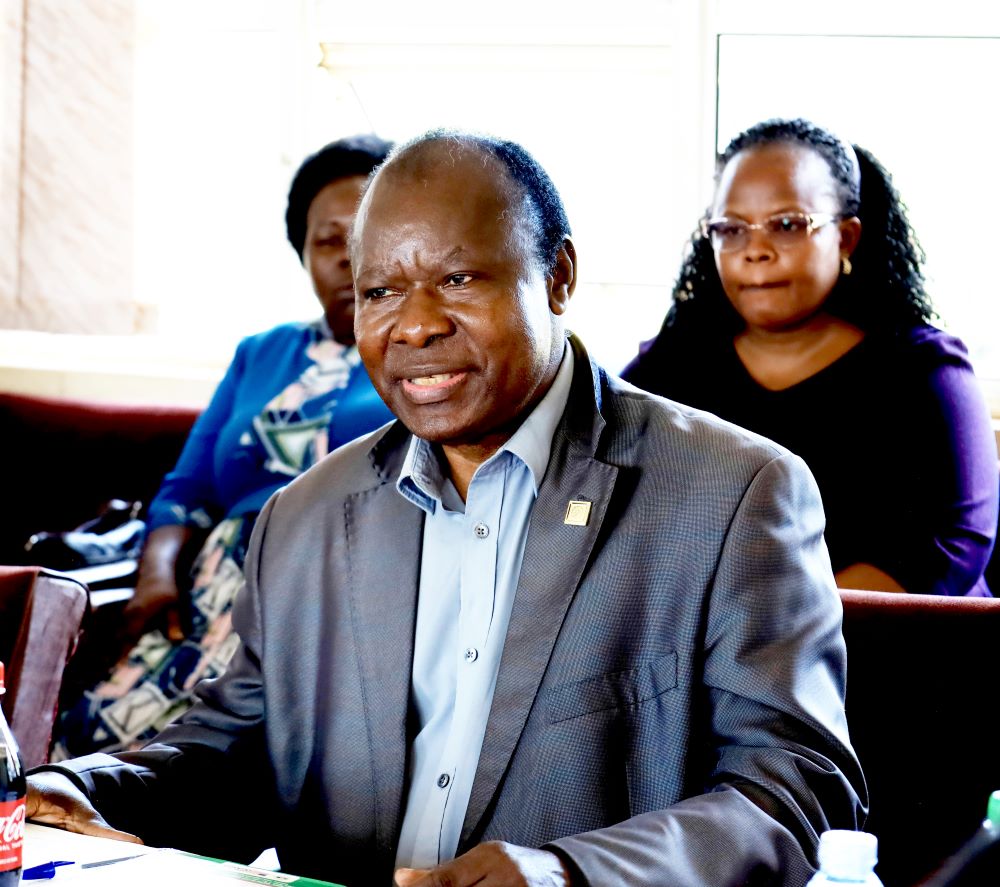
Prof. Fredrick Muyodi, Director of the Makerere University writing center
The role of GAMSU and compliance
Prof. Sylvia Antonia Nakimera Nannyonga-Tamusuza from the Grants Administration and Management Support Unit (GAMSU), highlighted the unit’s role in overseeing the entire life cycle of a grant. She hailed the college for its vibrant research and advised project leaders to ensure that all grants are registered in the central GAMSU system.
“No grant that is not registered onto the system will be allowed to implement these activities,” Nannyonga warned, citing a recent steering committee resolution. She urged researchers to move beyond just seeking certificates and to use GAMSU’s new automated pre-award system to interpret grant calls and prepare stronger applications.
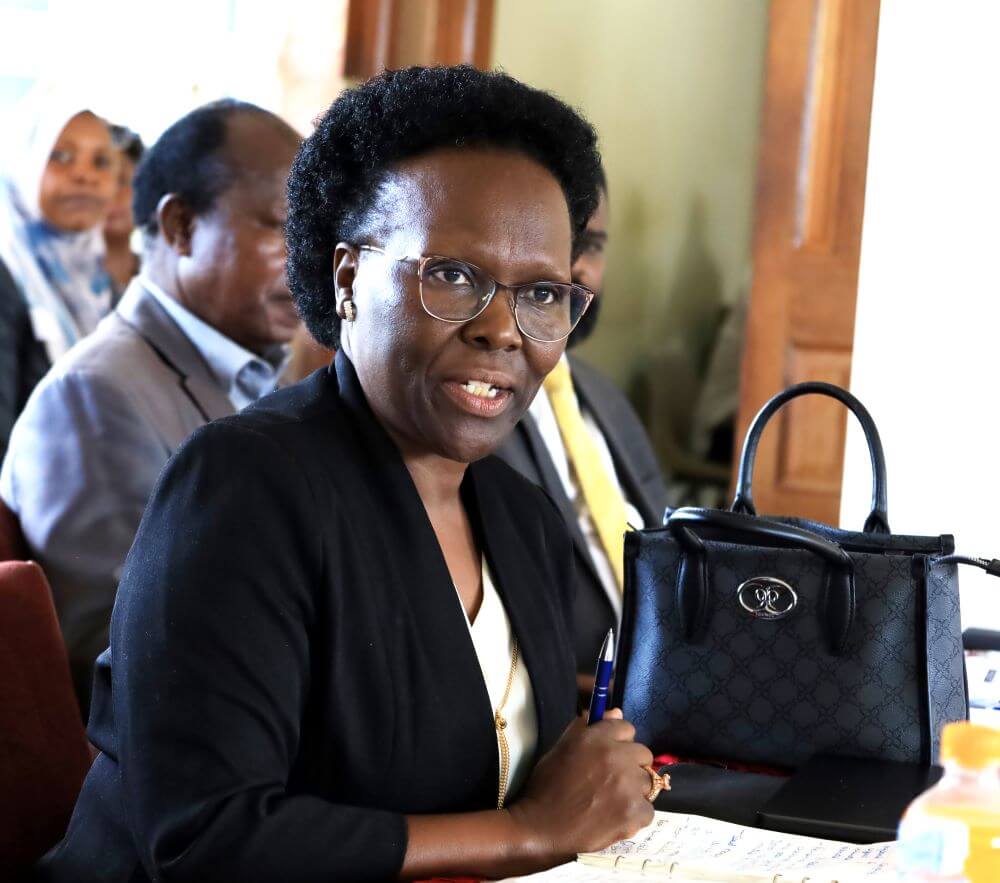
Prof. Sylvia Antonia Nakimera Nannyonga-Tamusuza
From Lab to the market: The Innovation Hub
Dr. Nagwovuma Margaret, representing the Makerere University Technology Innovation Centre (MUTIC), reminded the faculty that research should not end on library shelves. As a multidisciplinary hub, MUTIC supports the commercialization and scaling of innovations through incubation and prototyping.
Dr. Nagwovuma highlighted the importance of Intellectual Property (IP), reassuring staff that the university’s IP policy is designed to protect their work while facilitating commercial success. Prof. Nawangwe bolstered this sentiment, sharing his vision for “millionaire professors” whose wealth comes from patents and royalties.
She described MUTIC’s pipeline of ideation, protection, commercialisation and scaling, noting that 15 projects are currently being commercialised with support from the Research and Innovation Fund. She reassured inventors that the university pays for intellectual property protection without claiming ownership of their work.
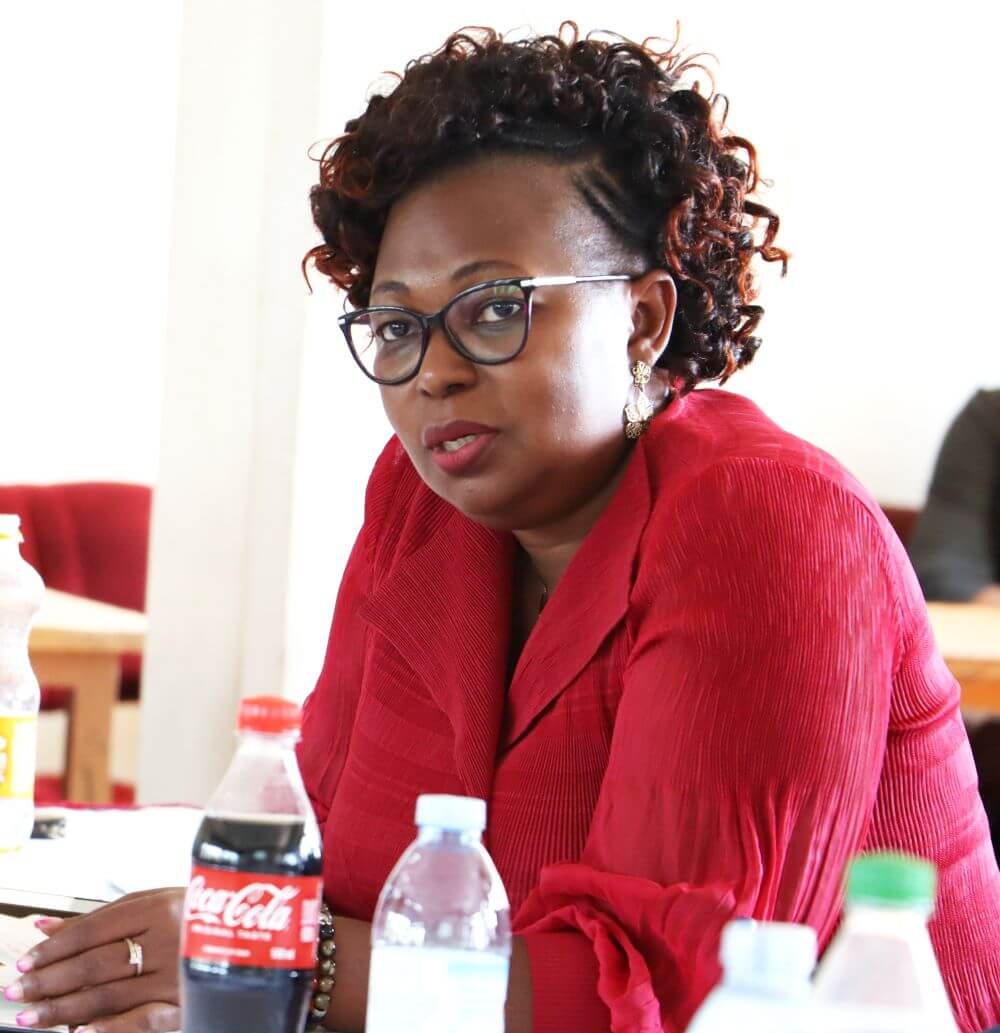
Dr. Margaret Nagwovuma, the director of Eservices, performance evaluation, ICT4D, Digital Innovation and ethics addressing the VC and other staff during the meeting
She cited examples including a tractor-driver training partnership with an agricultural firm and a forthcoming printed-circuit-board production line developed jointly with CoCIS and EASLIS, with funding from the Science, Technology and Innovation Secretariat.
Staff react
Attendees noted that some staff members are supervising up to nine doctoral and 15 masters’ students simultaneously while also being expected to write grants and teach.
Dr. John Ngubiri called for better “renumeration” or incentives for supervisors, suggesting that the current system, where supervision is part of a flat salary may not be sustainable given the new targets. Prof. Nawangwe suggested that colleges might use a portion of their grant overheads to incentivize internal examiners and supervisors as the university continues to lobby the government for a specific “research university” funding model.
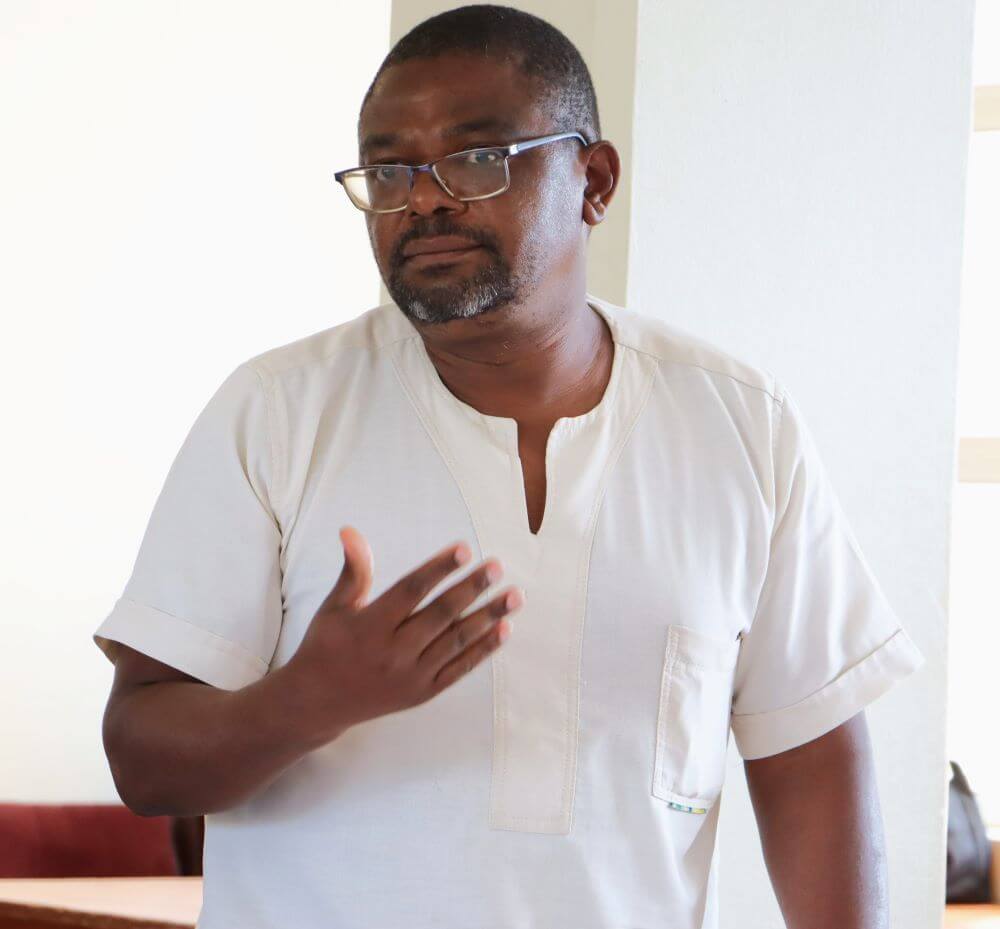
Dr. John Ngubiri, the RISE director at the College of Computing and Information Sciences addressing people during the meeting
Dr. Swaibu Kyanda, asked for clearer national guidance on computing notional teaching hours under the competence-based curriculum, saying the absence of clarity makes workload planning difficult, and asked for easier access to industry guest lecturers. He also attributed the low enrolment rates for PhDs to inadequate research funding.
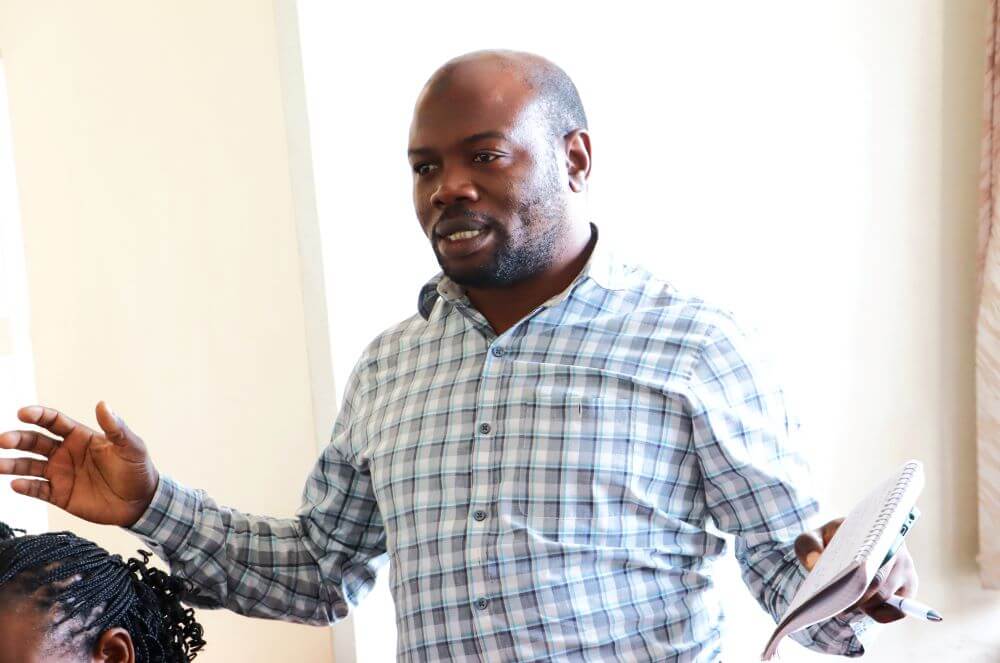
Dr. Swaib Kyanda, a senior lecturer at CoCIS giving his remarks during the meeting
The Nigerian visiting Prof. Alo Oluwaseum Olubisi from Ladoke Akintola University of Technology (LAUTECH) in Nigeria, who served as an external assessor for the Computer Science Department, asked whether Makerere could formalise staff and student exchange programmes, six-month internship placements and postdoctoral fellowships with Nigerian universities, and whether continuity funding could be extended to grant-supported projects, citing her own work of developing a mobile dermatology screening app once initial grants expire.
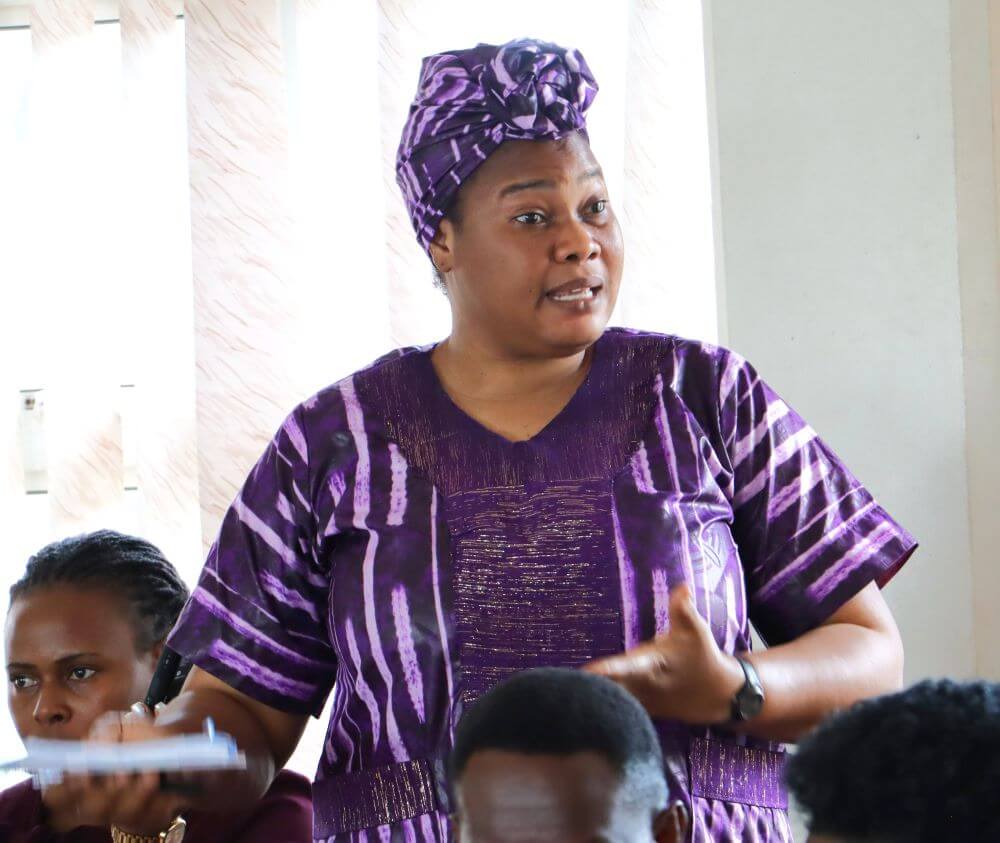
Prof Alo from Nigeria addressing people in the meeting
In response, Prof. Nawangwe said Makerere had signed roughly 600 partnership agreements in the past three months alone and encouraged the visiting academics to initiate informal exchanges immediately while a formal memorandum of understanding are finalised. He pointed to the ARUA model of shared continental centres of excellence as the template for such collaboration.
Members also called for development of a university AI-use policy for students and staff alike, warning that without it, “AI will remain a problem, not a tool.”
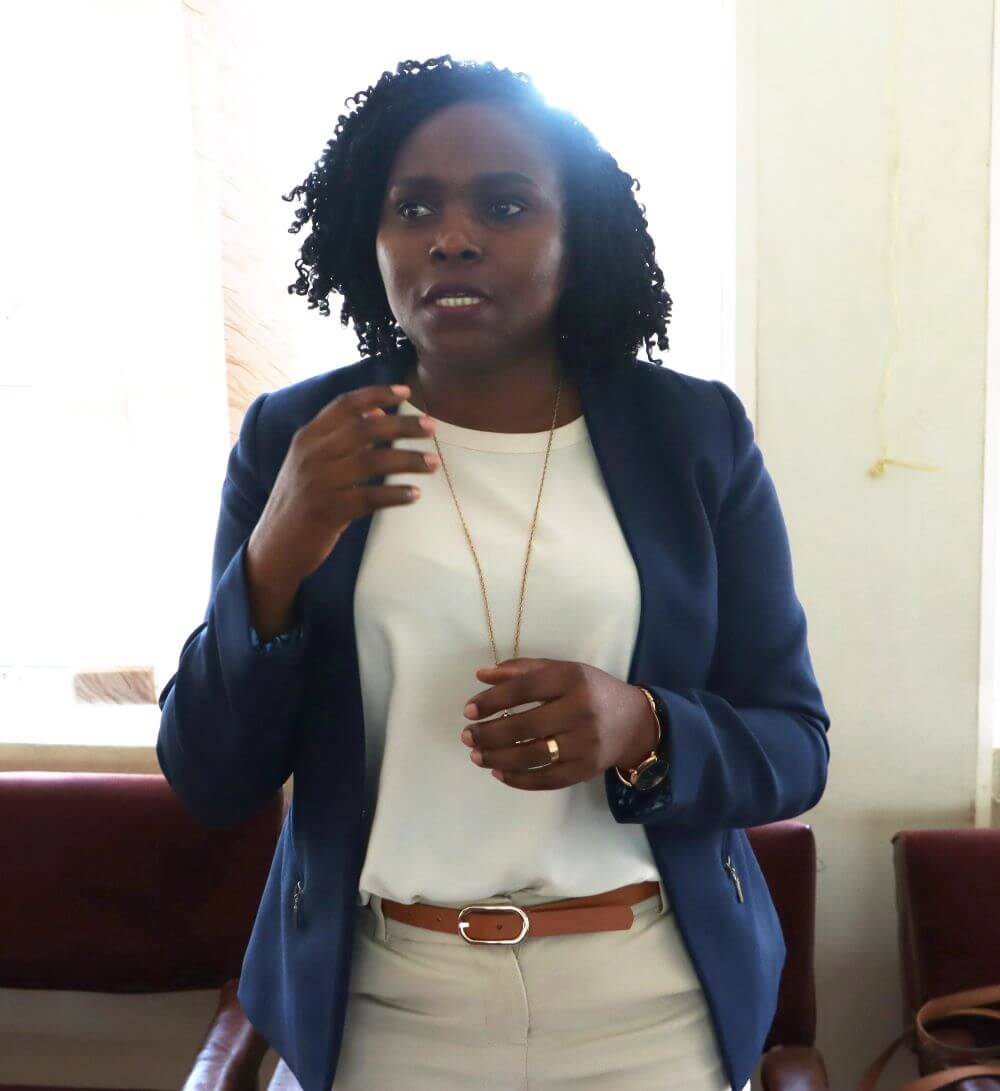
Dr. Rose Nakasi speaking during the meeting
A call for interdisciplinary leadership
The Vice Chancellor emphasized that CoCIS is at the centre of everything the university aims to achieve. With the rise of Artificial Intelligence and digital human health, the college must lead multidisciplinary collaborations with agriculture, medicine, and the humanities.
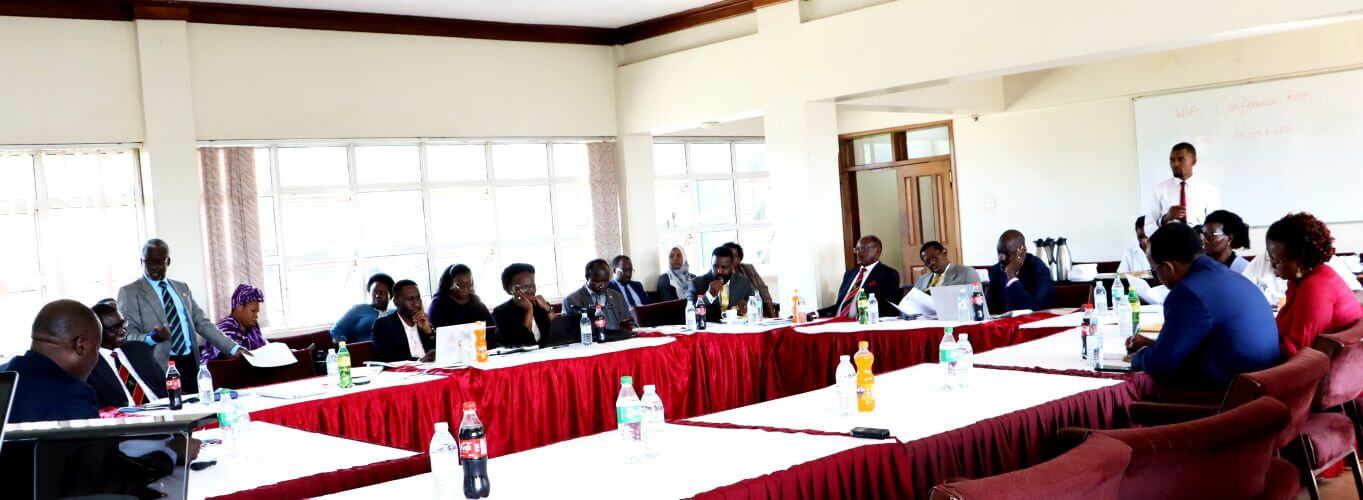
Meeting Participants
The university’s new structure is specifically designed to be “top-heavy,” creating more positions for Professors and Associate Professors to lead this research revolution. Prof. Nawangwe’s final message was one of generational responsibility: to use the capacity of Makerere to free the continent from marginalization and lead the world through skill and innovation.
In his closing remarks, the Deputy Principal Dr. Peter Nabende welcomed the engagement as a rare opportunity to raise institutional challenges directly with university management, while acknowledging constraints that continue to slow progress.
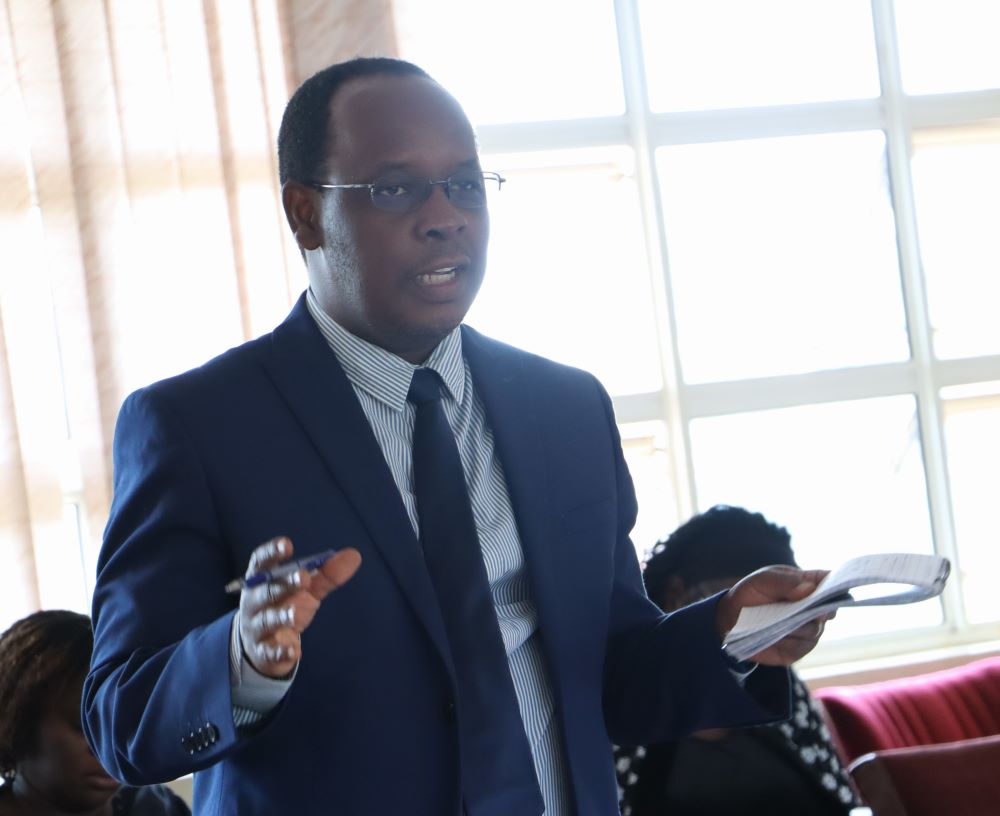
The deputy principal addressing people during the meeting
He pointed out on items such as establishing a dedicated research ethics committee for the college, strengthening research clusters and group supervision models as take-home messages among others.
PDF -Prof._Oyana_CoCIS_Presentation_VCs_visit
Report by Andrew Twahirwa
Photo Credit: Peninah Nalubega