
CoCIS_Admin
- Posted on
Makerere Launches Scholarly Guide, Calls for Increased Research, Publication and Innovation in Africa
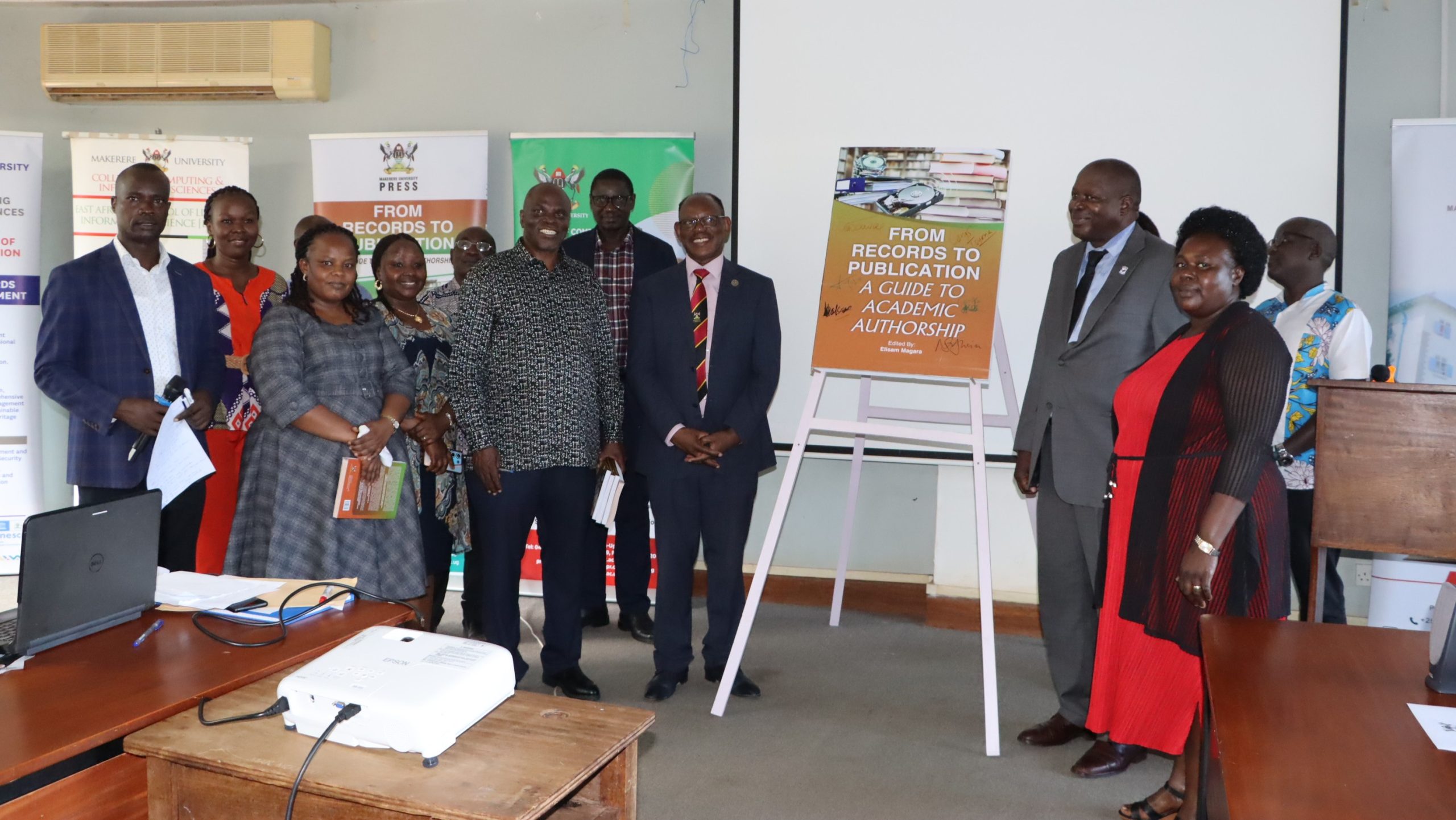
Members of EASLIS and CoCIS in group photo with Prof. Barnabas Nawangwe after the launch
VC Emphasizes Research as Key to Africa’s Global Integration
Makerere University Vice Chancellor, Prof. Barnabas Nawangwe, has urged universities across Africa to invest in research, publication, and innovation as a pathway to greater participation in the global knowledge economy.
Speaking at the launch of From Records to Publication: A Guide to Academic Authorship, edited by Prof. Elisam Magara of the East African School of Library and Information Sciences, Prof. Nawangwe highlighted Africa’s low contribution to global scholarship. “Although Africa accounts for 15 percent of the world’s population, it produces only 3 percent of global research publications,” he said.
“There are historical reasons for this,” the Vice Chancellor continued, referencing centuries of slavery and colonialism. “You cannot brush away 600 years of subjugation. And we Africans have not even written enough about that. If we want to move Africa back into the global community, we must invest in research, publication, and innovation.”
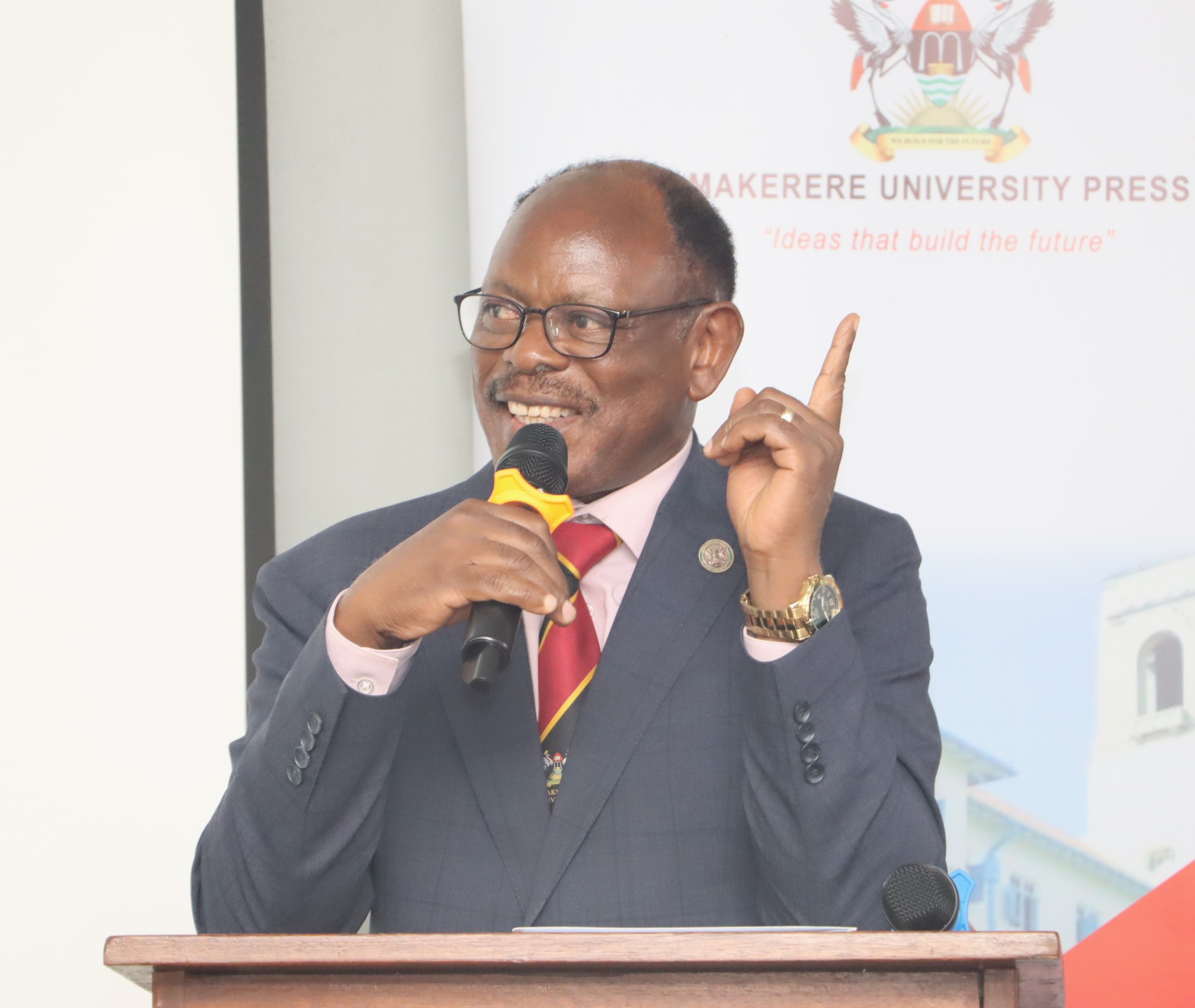
Prof. Barnabas Nawangwe speaking during the book launch
He cited China as an example, noting how the country’s investment in research and education has translated into economic and global influence. “When we say China is the factor of the world, it is not that people just wake up and begin making things. They invest in education, in publication, in research. If we want to transform Africa, we must do the same.”
Prof. Nawangwe highlighted Makerere’s progress, revealing that annual peer-reviewed publications have grown from about 500 a decade ago, to 700, and now exceed 2,000. He acknowledged that the university still trails South African institutions, partly because they operate numerous local journals that absorb significant volumes of research. “We are not fully utilising the brand of Makerere University Press,” he said, pledging support to strengthen the press and scale up journal production.
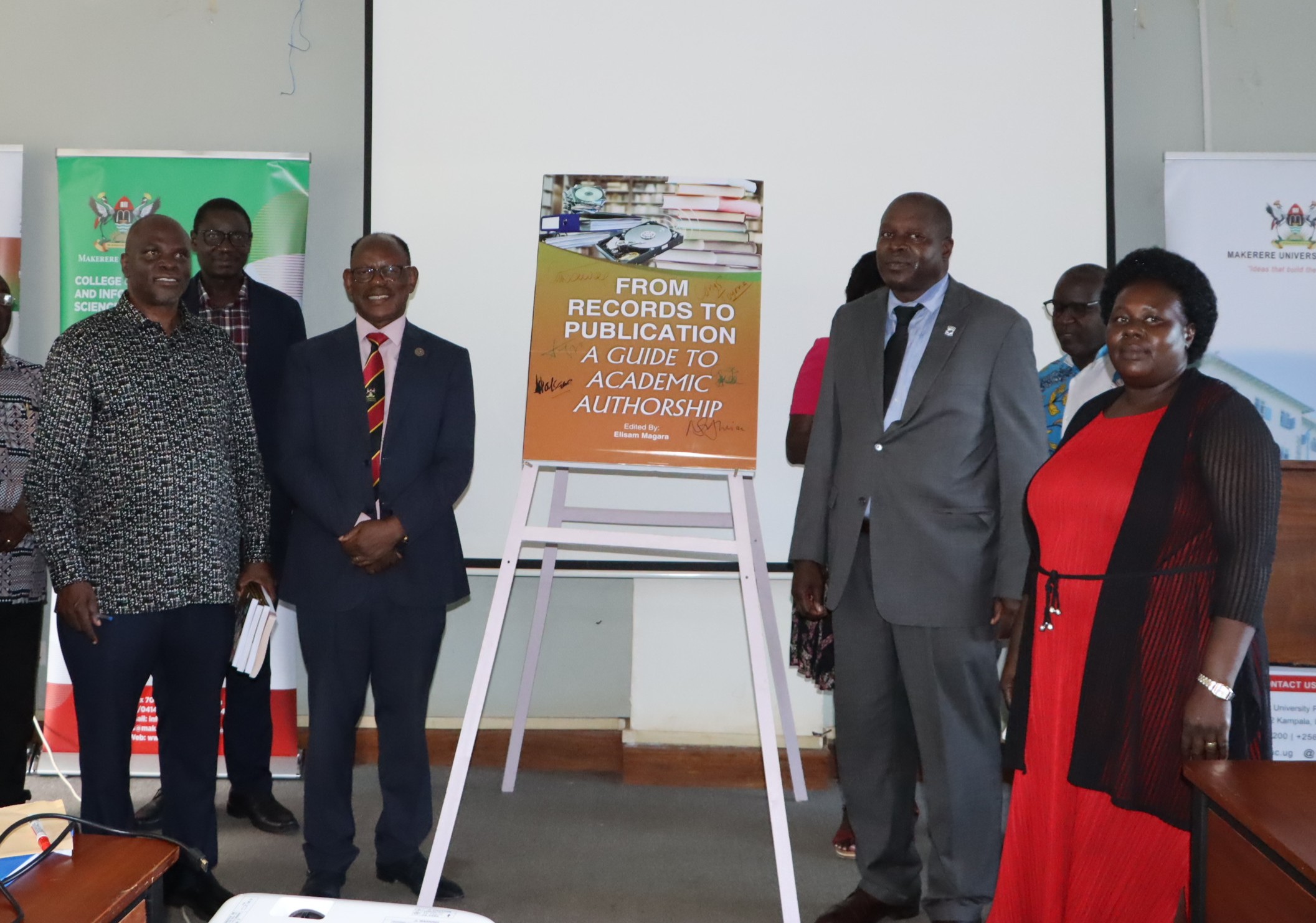
Prof. Eliam Magara, prof. Barnabas Nawangwe , Prof. Tonny Oyana and Dr. Sarah Kaddu during the launch
He also reaffirmed the university’s strategy to reduce excessive undergraduate enrolment and expand graduate training to boost research output. “Let us create time for professors to do research and supervise more graduate students,” he said.
Commending Professor Magara and his team for producing the authorship guide, Prof. Nawangwe described the book as an essential handbook for Master’s and PhD students, early-career researchers, and universities across the region striving to become research-led. “This is at the heart of the university. If we invest in research and publication, we secure our future,” he said.
Book Recommended as Mandatory Guide by College Principal
Makerere University’s Principal of the College of Computing and Information Sciences, Prof. Tonny Oyana, called for the newly launched volume to be adopted as a mandatory guide for graduate students and newly appointed lecturers. “This is not a bad book for our first-year PhD students to start with,” he said. “Even those who are hired as junior lecturers still need mentorship. If I were the Vice Chancellor, I would put this book as required reading for every new hire.”
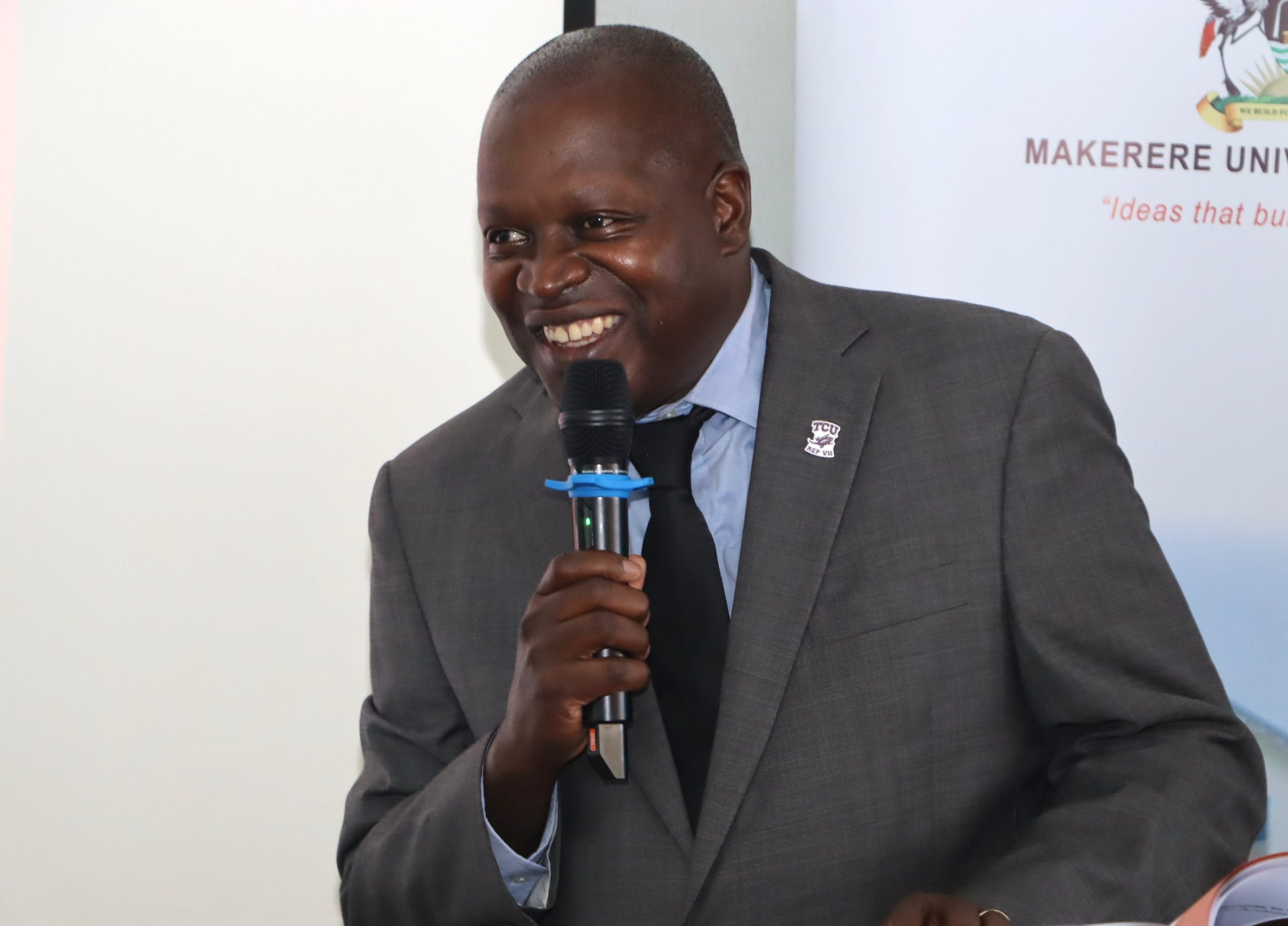
Prof. Tonny Oyana speeaking during the launch
Prof. Oyana reflected on his personal contribution to the book, revealing that administrative responsibilities nearly forced him to withdraw. “Because of the work that I do, I was about to give up,” he admitted. “But Professor Magara was persistent. He came back to me and gave me more time.”
He credited a PhD student, Caroline Ilako, for assisting with library research and literature reviews, saying, “She did a wonderful job. We went back and forth through revisions, but finally we produced the work.”
On the quality of the book, Prof. Oyana said, “When you pick up a book, look at how it is laid out. The quick judgment tells you about the quality. This is well put together. We are beginning to show quality comparable to Western presses.”
He also challenged traditional notions of “publish or perish,” noting, “As scholarship evolves, those who evaluate scholarship must also adjust. Impact, innovation, and tangible products are increasingly valued alongside journal articles.”
Editor Highlights Research-Based Approach
Prof. Elisam Magara, the book’s editor, explained that the guide is designed to support scholars from the moment they conceive a research idea to the point their work is published and read. “I looked at the books we were using and asked myself: which kind of book can truly guide students? We needed a clear guide from the time a scholar thinks of writing up to the time the book is read,” he said.
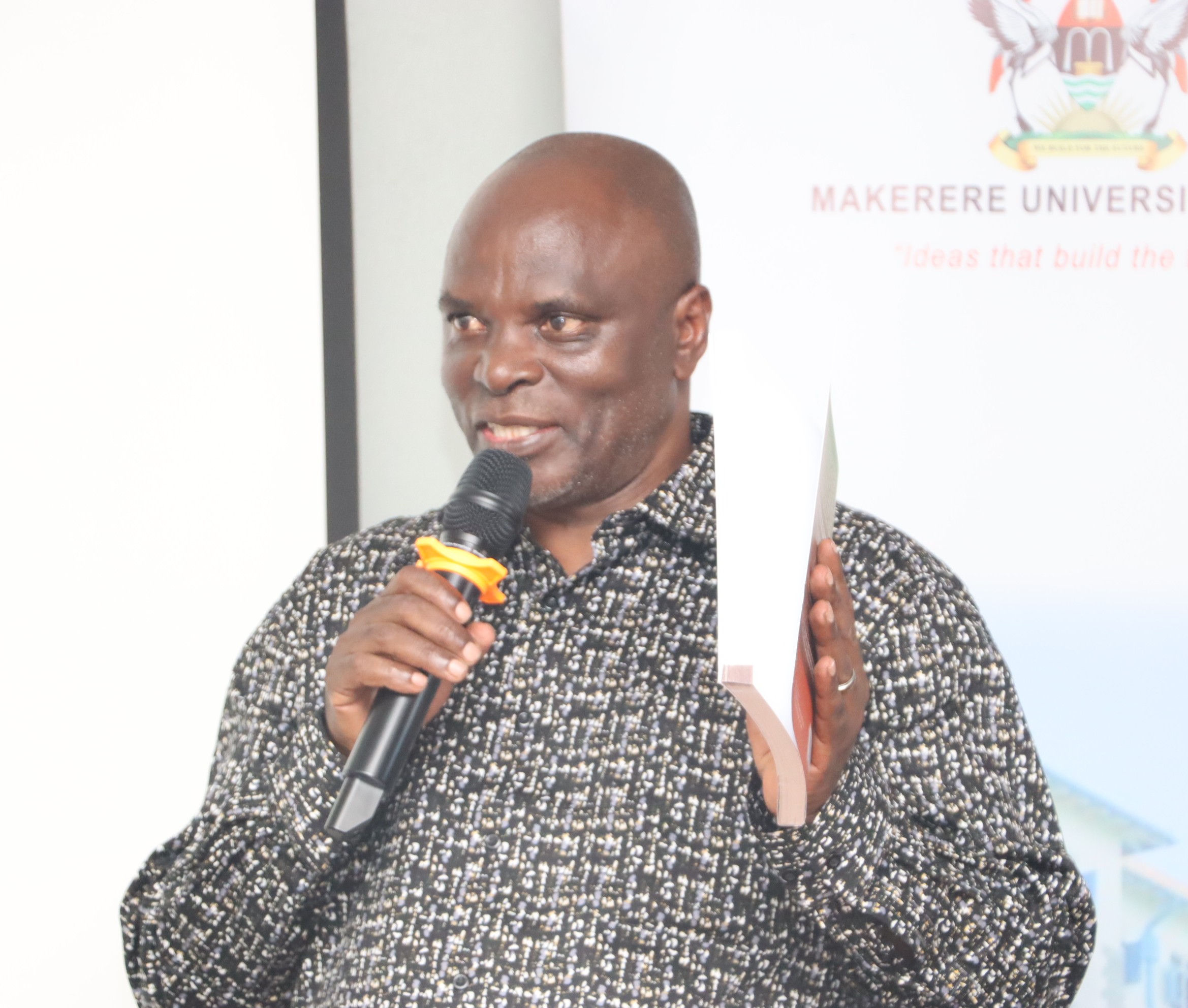
Prof. Elisam Magara giving the details of the publishing process
He detailed the rigorous editorial process that began in 2022, including international calls for contributions, peer review of abstracts, writeshops for feedback, and multiple rounds of chapter reviews. “Don’t write and keep,” he advised. “Your book must have impact. It must reach the public and be used.”
Prof. Magara also acknowledged the sabbatical granted by the Vice-Chancellor, which enabled him to balance teaching and editorial responsibilities. “This book is meant not just for Makerere but for scholars across the region and beyond,” he said.
Mak Press Outlines Rigorous Publishing Process
Dr. Isaac Tibasima, representing the Managing Director of Makerere University Press, explained the publication pathway. “Once you bring your manuscript to the press, we take it through evaluation, external peer review, revisions, copyediting, typesetting, and pre-press review before printing,” he said.
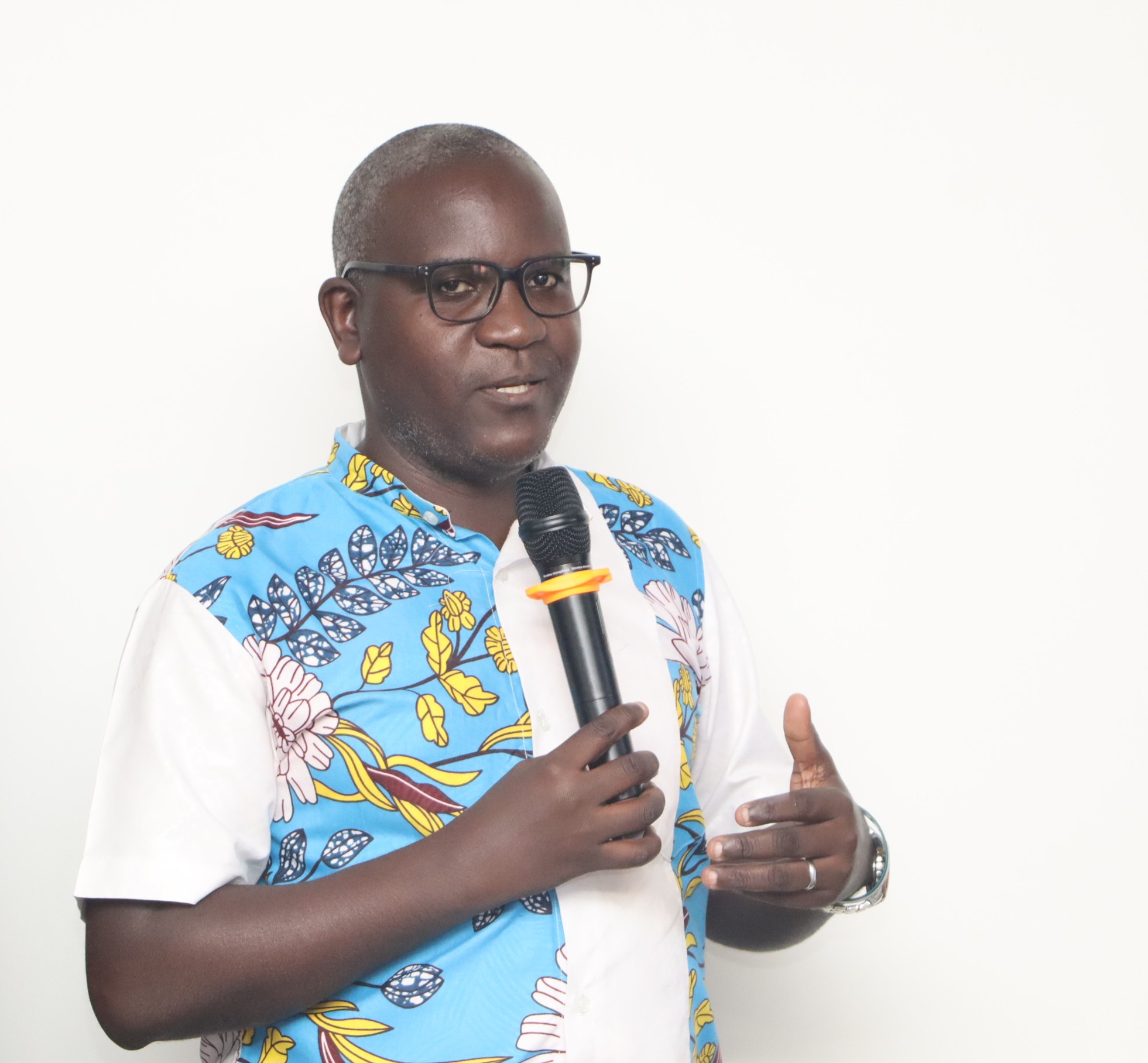
Dr. Isaac Tibasiima representing the Managing Editor MakPress
He also highlighted the press’s efforts to strengthen college-based journals. “We will not run the journals, but they will be published under the imprint of Makerere University. If we produce consistent issues, we can then move toward global indexing,” Dr. Tibasima said.
All new journals and articles now carry Digital Object Identifiers (DOIs) to enhance discoverability, while past publications are being retroactively assigned DOIs. “We are not there yet, but we are moving there, and we are intentional about getting there,” he added.
School Leaders Celebrate Scholarship and Mentorship
In welcome remarks, Dr. Sarah Kaddu, Dean of the School, said, “This event is a celebration of scholarship, intellectual discipline, and the journey of knowledge creation. This book speaks directly to one of the most critical challenges facing scholars—transforming research records into publishable work.”
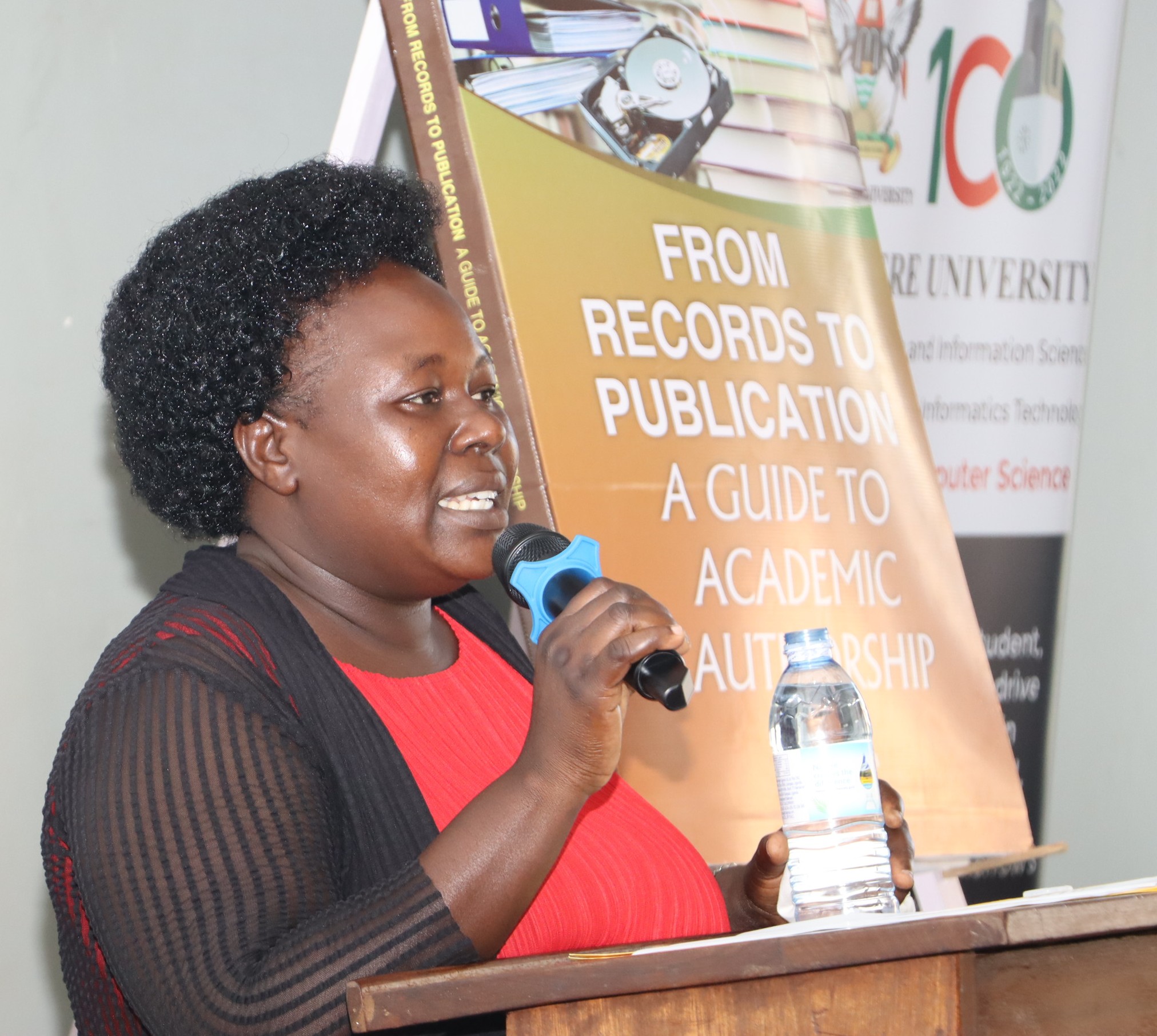
Dr. Sarah Kaddu Dean, EASLIS speaking at the book launch
Dr. Sylvia Namujuzi, Head of the Department of Records and Archives Management, added, “This book is timely. It responds to real challenges faced by early-career researchers, postgraduate students, and even seasoned academics—questions of structure, authorship ethics, citation, collaboration, and navigating the publication ecosystem.”
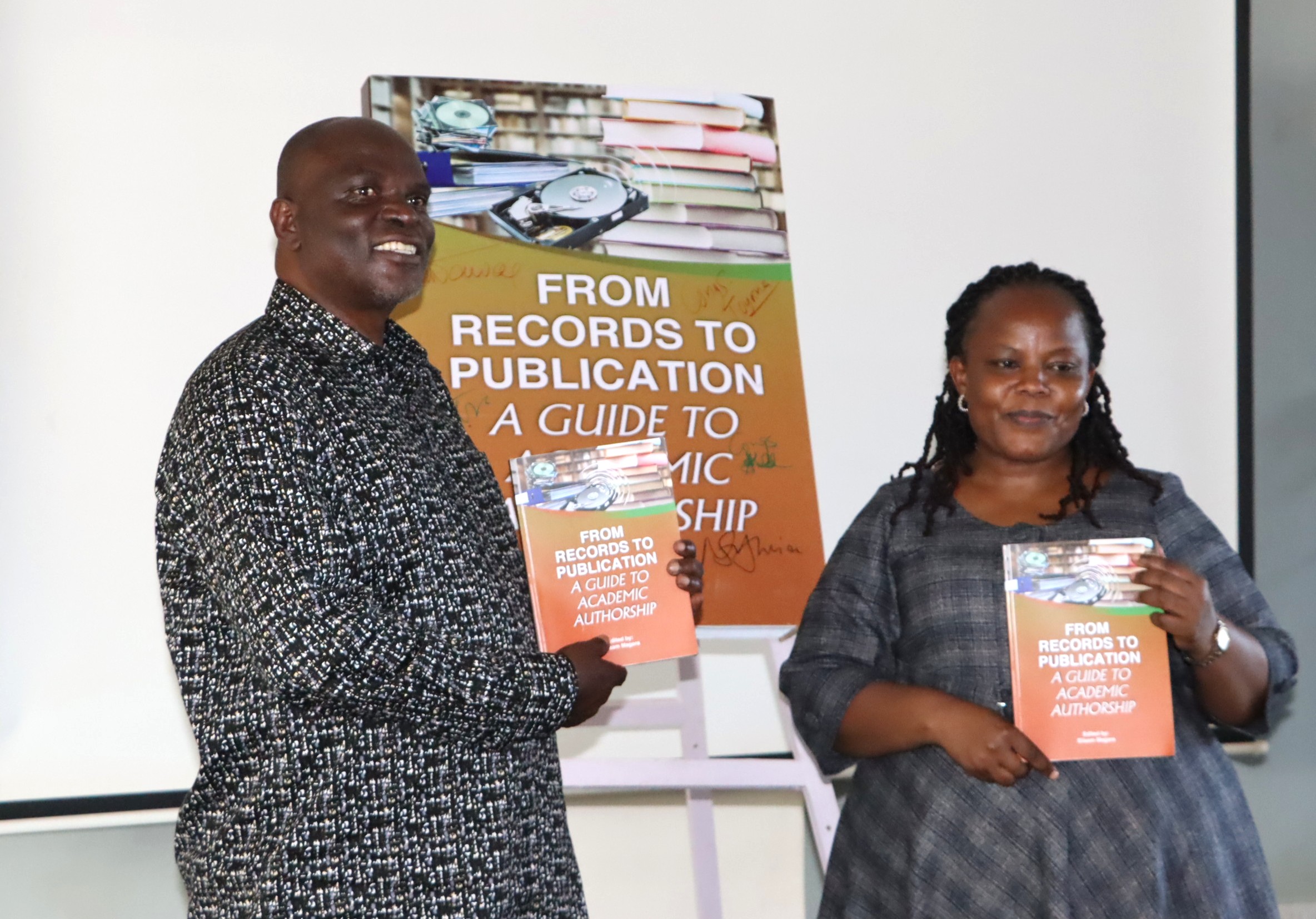
Prof. Elisam Magara and Ag. Head of Department Dr. Sylivia Namujuzi
She concluded: “Well-managed records are not endpoints; they are the beginning of inquiry, reflection, and publication. This guide demonstrates that pathway.”
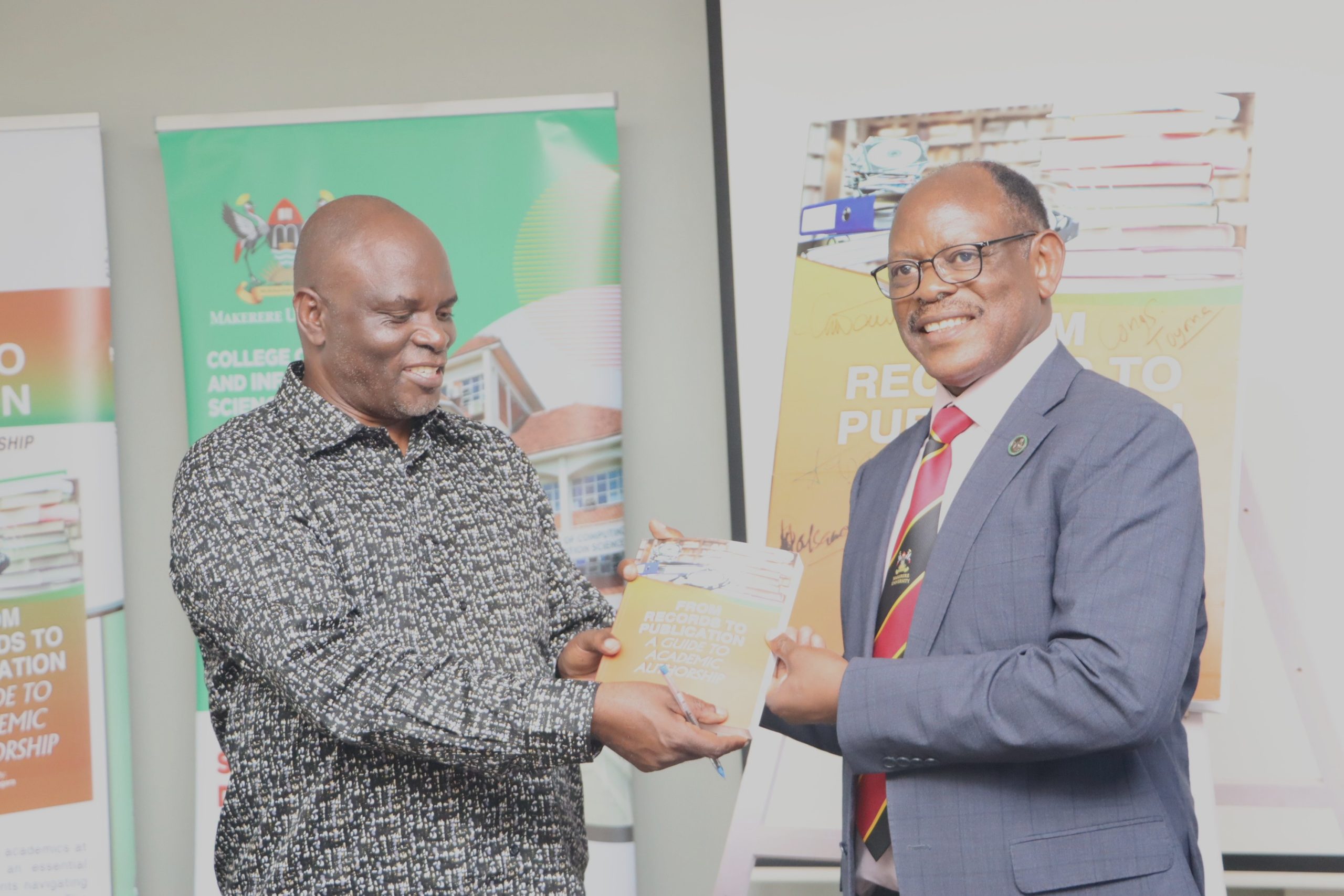
Prof. Elsam Magara hands over the book to Prof. Barnabas Nawangwe
Book Outline
- Introduction: Publication Journey. (Prof. Elisam Magara)
PART I: Foundations of Academic Authorship.
- Conceptual Foundations of Academic Authorship
Elisam Magara and Joseph Kiplangat.
- Archives as a Source of Information for Academic Writing
David Luyombya, Sylivia Namujuzi and Francis Ekwaro
- The place of Oral History in Contemporary Writing
Elisam Magara, James Nkanshah-Obrempong and Nthan Nzyoka Joshua
- Managing Ethical Dilemmas in Academic Writing
Maria Tsvere, Tsitsi Kanonge and Joselin Chigwada
- The Role of Copyright and Neighbouring Rights in Protecting Works of Authors and Publishers in Uganda
Ronald Kakungulu Mayambala
PART II: Managing the Publication Process
- A Manuscript: From Inception to Publication
Sarah Mirembe Kyankya
- Managing Co-Authorship in Academic Writing
Gankhanani Moffat Moyo
- Managing Illustrations and Visual Artworks in Academic Writing
Bob Magara Rutatugirwa
- Tapping into Open Access Platforms for Gainful Authorship
George Muganga
- Managing the Costs in Academic Authorship
Aloysius Rukundo
- The Important Translation in Publication
Monica Mweseli
- Citations and Referencing in Academic Writing
Clement Lutaaya Nabutto, Namujuzi Sylivia, and Daviv Luyombya, Makerere University
- Referencing Management Software In Academic Writing
Odeke Moses Osamai and Constant Okello-Obura
- Compliance with International Bibliographic Control Standards in Academic Authorship
Elisam Magara and Dniel Osinde
PART III: Secondary Services in Academic Writing
- Journal Impact Factor and its Role when Submitting a Publication Article
Tonny J. Oyana and Caroline Ilako
- Managing Mentorship Programmes for Scholarly Writing
Diyoshak Rhoda Danladi and Elisam Magara
Report by
Jane Anyango, Principal Communication Officer CoCIS
Ritah Atukwatse, Journalism and Communication Student (2nd Year)
Fred Kanwagi, Journalism and Communication Student (3rd Year)
