CoCIS_Admin
- Posted on
Makerere AI Health Lab Champions Artificial Intelligence in Uganda’s Malaria Fight
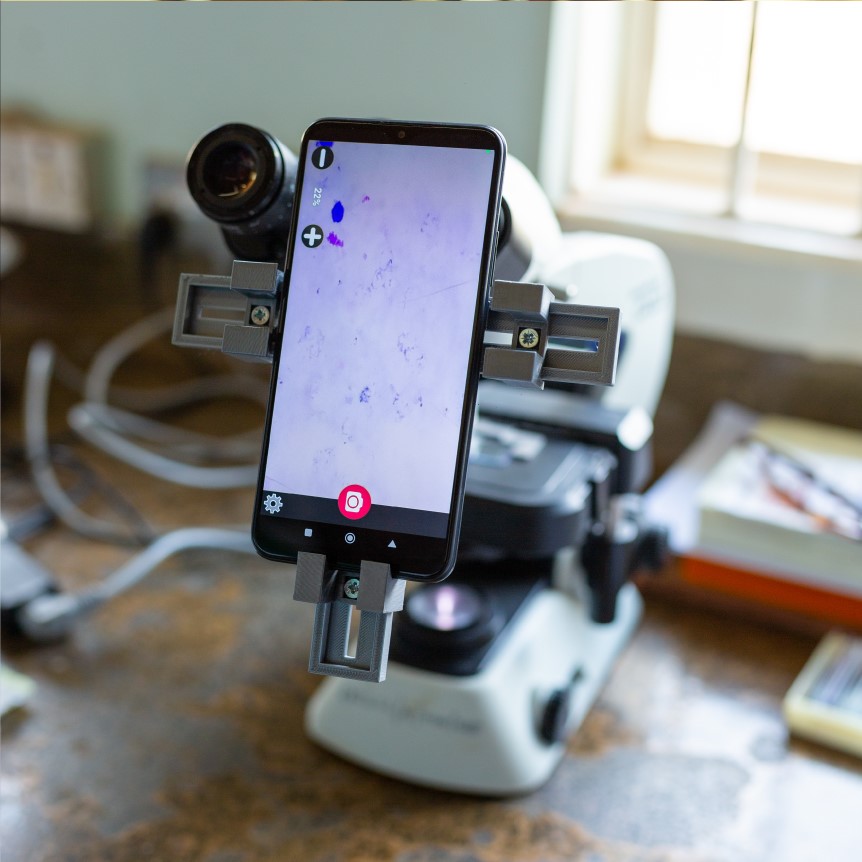
Photo credit: Mak AI Health Lab Website
Automating Microscopy
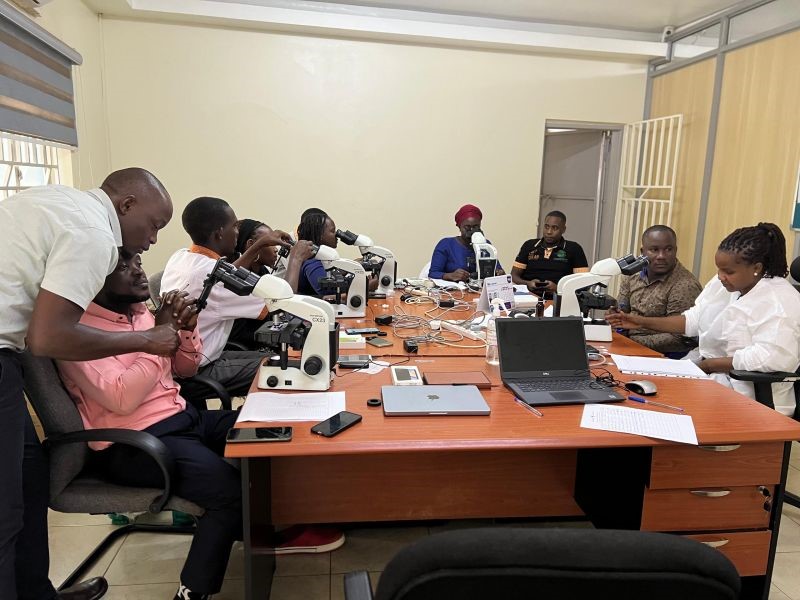
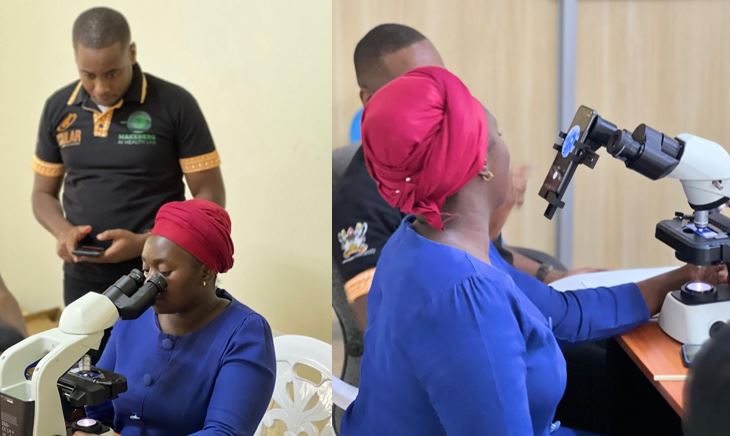
Recently, 10 dedicated participants, 7 laboratory technologists and 3 members of the Makerere AI Health Lab came together at Kebera Diagnostic Laboratories (KDxL) for an internal validation exercise. 74 Ziehl-Neelsen stained smears were examined and 750 microscopy images captured. The collected data will be used to train the AI model, followed by data cleaning and sensitivity & specificity analysis, before a full validation report is generated. The goal, an AI that can distinguish positive from negative TB smears with greater precision reliably, in real clinical settings.
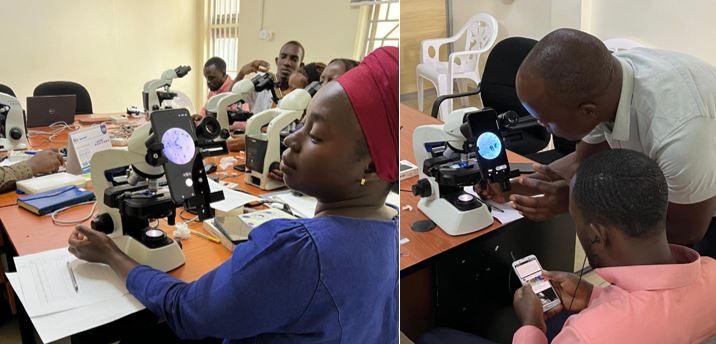
Leveraging Artificial intelligence for disease screening
Makerere AI Health Lab Leveraging Artificial Intelligence for Disease Screening The Ocular project has made significant progress in developing innovative tools for disease diagnostics, focusing on malaria, tuberculosis, and cervical cancer.
These products combine advanced technology with practical healthcare solutions to enhance diagnostic accuracy and efficiency in resource-limited settings.
Adapter Design and Fabrication
The project successfully designed and fabricated 3D-printed adapters that can be mounted on microscopes used in diagnosing malaria, tuberculosis, and cervical cancer. These adapters were field-tested in health centers and refined based on feedback to ensure optimal performance.
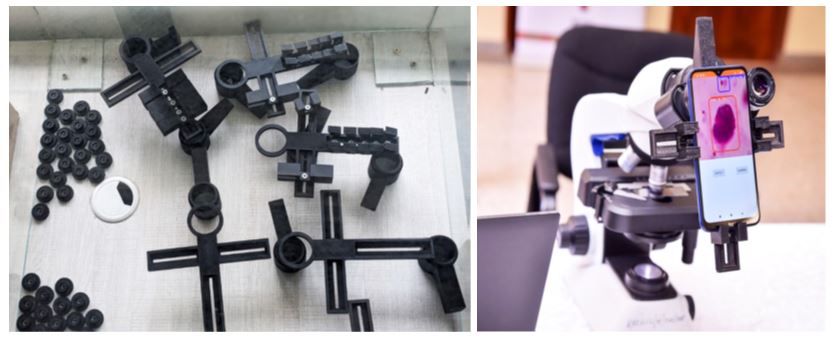
L- Adapter designs fabricated in Mak AI-Health Lab. R- Adapter fixed on microphone holding the smart phone
Data Collection App (Malaria and Cervical Cancer)
This app facilitates the systematic collection of microscopy data related to malaria and cervical cancer. It captures images along with important metadata, such as blood slide details and microscope settings. The data is uploaded to a central server, contributing to the creation of a robust dataset that can be used for training AI models and refining diagnostic tools.
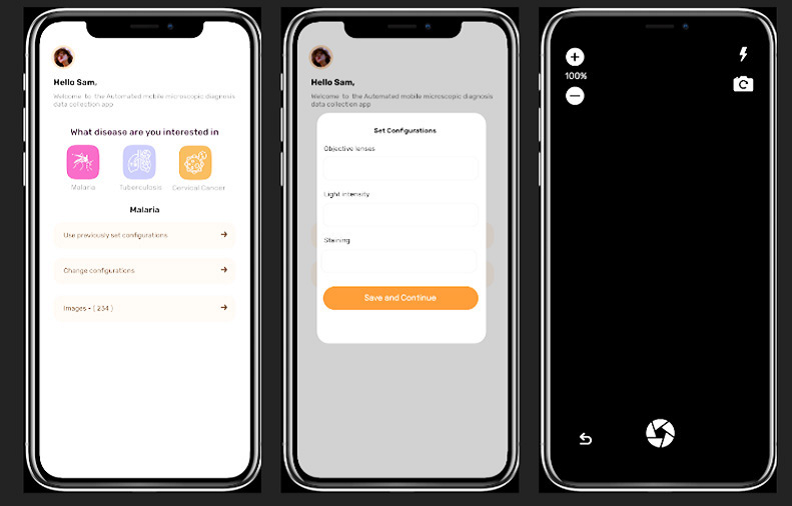
Data collection application for malaria, TB and Cervical Cancer Images
Malaria Diagnosis App
An Android app was created using AI-driven object detection technology to improve malaria diagnosis. The app allows users to capture or upload microscopy images, which the AI system processes to detect and highlight white blood cells and malaria trophozoites using bounding boxes. This tool improves diagnostic accuracy, making it especially useful for healthcare professionals working in resource-limited environments.
Real-Time Surveillance and Ecosystem Intelligence
Beyond diagnosis, AI is being used to address delayed malaria surveillance data. In many rural areas, manual reporting creates lags that hinder outbreak response. The Ocular system integrates real-time data into Uganda’s Health Management Information Systems (HMIS). By incorporating environmental factors like mosquito breeding patterns, rainfall, humidity, and ITN coverage, AI models can forecast outbreaks more accurately and guide geographically targeted interventions. Collaboration with environmental health experts and net distribution teams ensures contextualized, actionable insights for the Ministry of Health.
Multilingual Chatbots and Community Engagement
Recognizing the importance of public understanding, Makerere AI Health Lab is developing AI-powered chatbots and medical translation tools in local languages. These platforms educate communities on malaria prevention, symptoms, treatment, and the role of AI in healthcare. By being culturally aware and community-facing, the tools foster trust, awareness, and empower individuals to seek timely care.
Microscopy Teaching Aid
A desktop and mobile app designed to enhance microscopy education was also developed. Students and professionals can capture images, which are then uploaded with metadata for annotation and instructional feedback. This interactive platform improves diagnostic skills by providing hands-on learning experiences, making it a valuable educational tool for both students and professionals. The project work aims to integrate these AI-enhanced tools into the existing health care infrastructure, making disease surveillance and diagnosis more accessible and reliable in Uganda and potentially other similar contexts.