CoCIS_Admin
- Posted on
STI Minister Commends CoCIS for Innovations
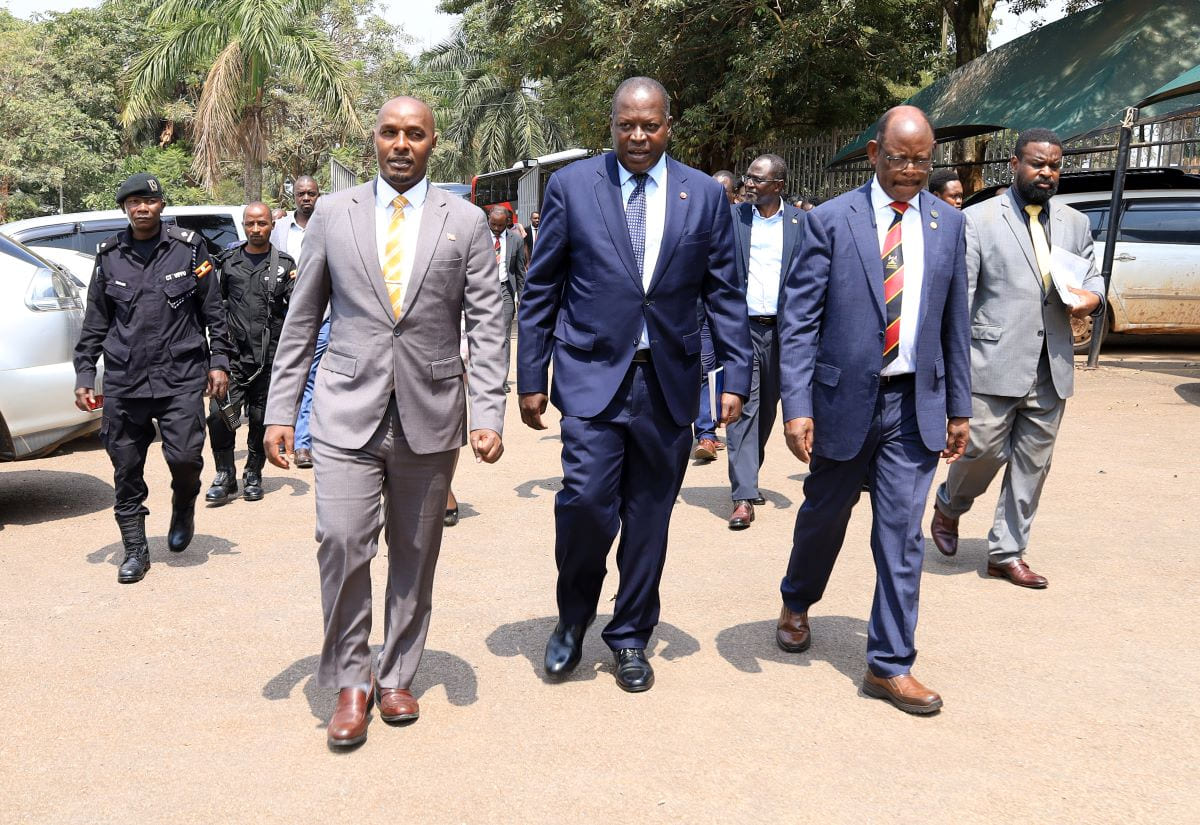
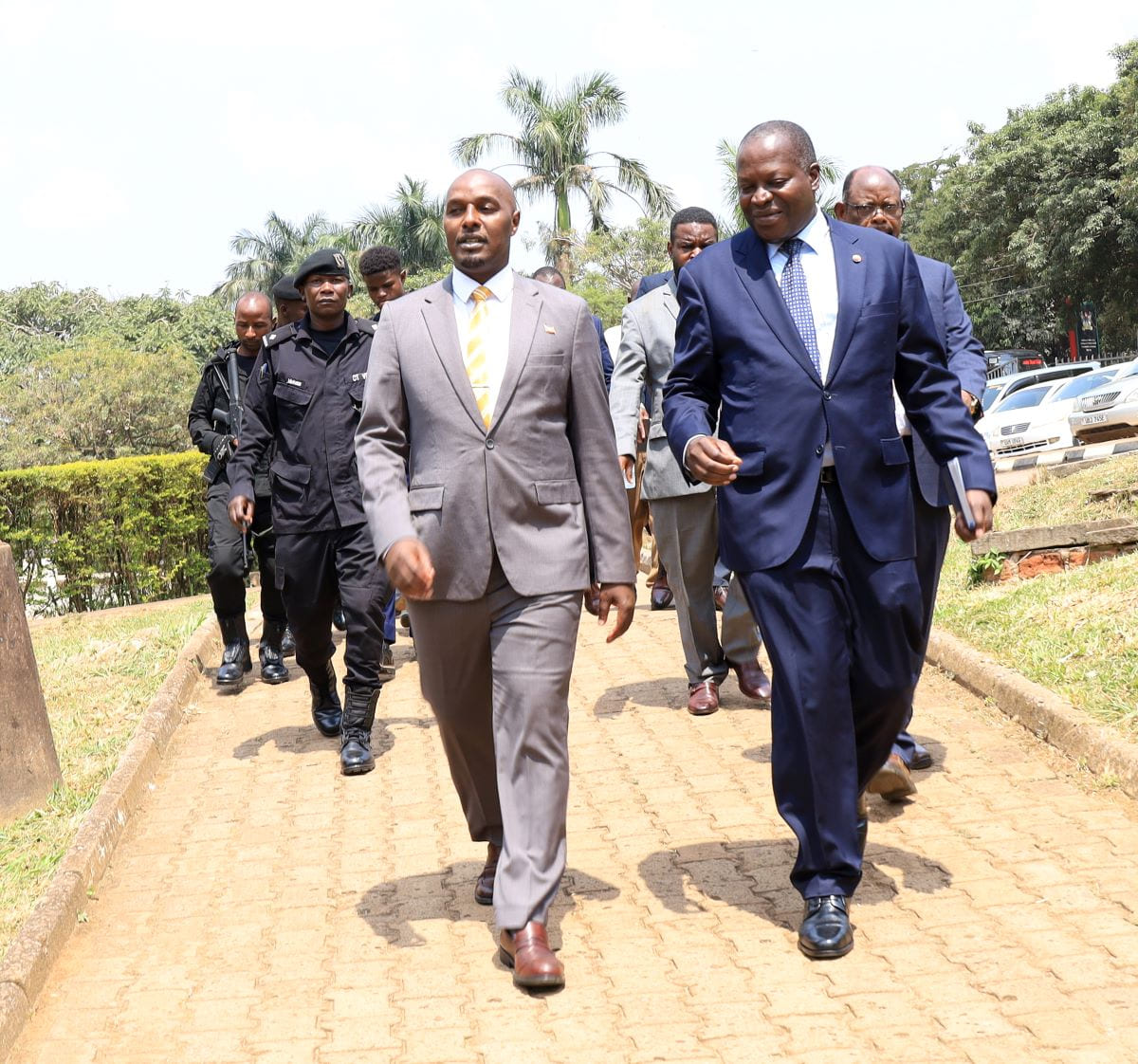
The Minister of Science, Technology and Innovation, Hon. Eng. Jonard Asiimwe Akiiki, paid a high-profile visit to Makerere University’s College of Computing and Information Sciences (CoCIS), touring its flagship research labs and challenging staff and students to push their innovations from the laboratory bench into the marketplace.
The visit, which drew the Vice ChancellorProf. Barnabas Nawangwe, CoCIS Principal Prof. Tonny Oyana, Deputy Principal Dr. Peter Nabende, deans, department heads and lead researchers, took the Minister through four of the College’s most active research units before culminating in an open dialogue with staff.
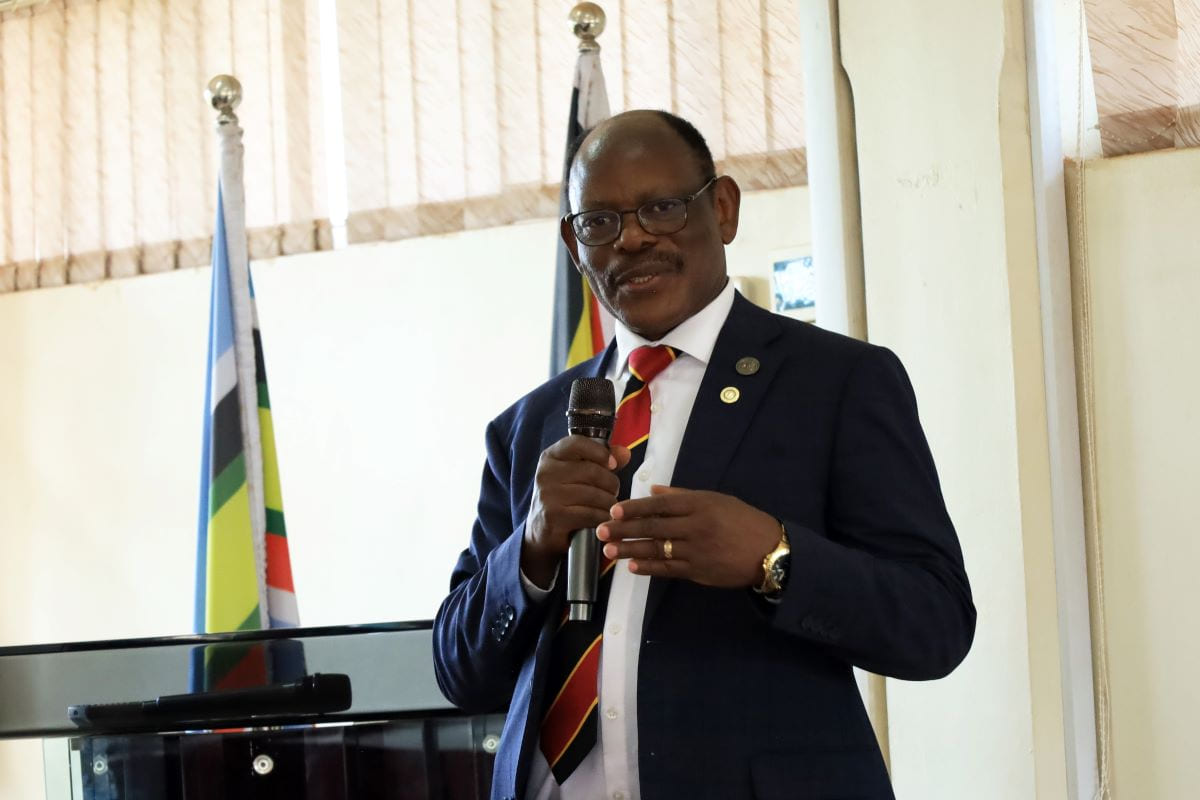
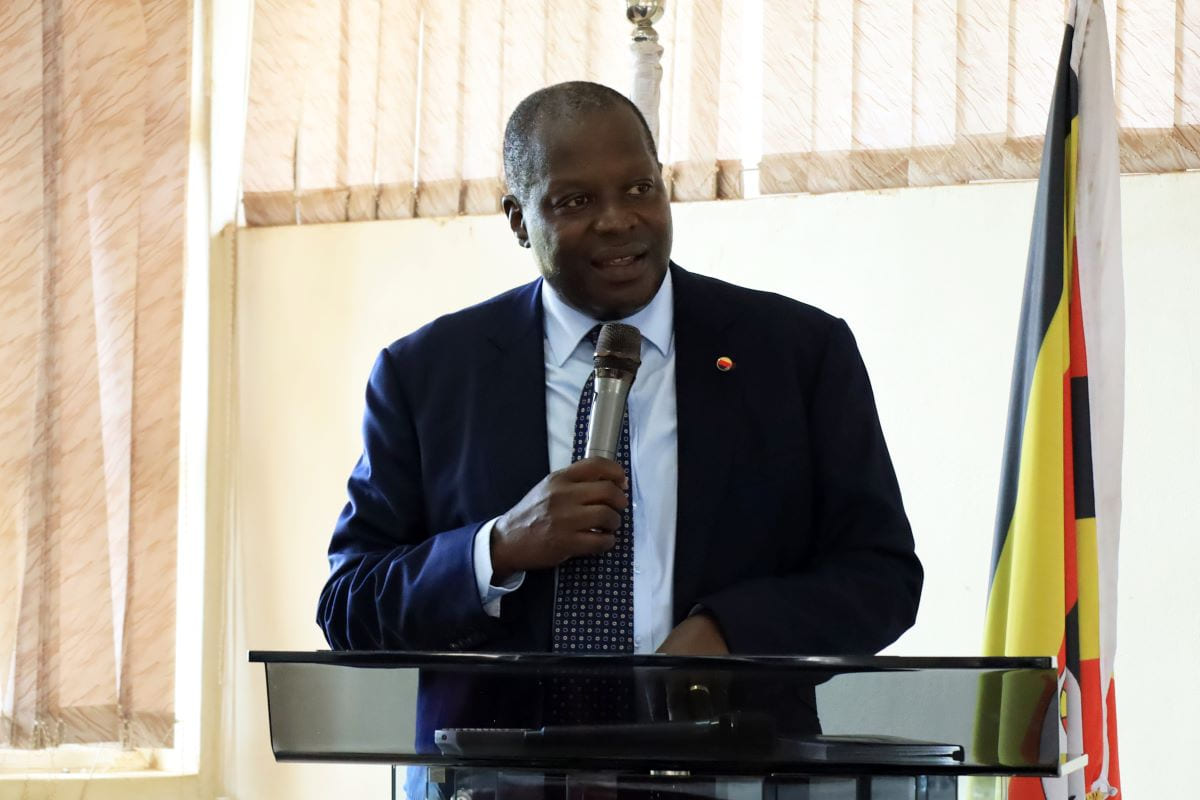
Prof. Barnabas Nawangwe giving remarks during the meeting
The tour opened at a speech and language technology lab, where researchers demonstrated a speech-recognition platform covering 18 African languages, including Luganda, Swahili, Kinyarwanda and Lingala. The team showed how the models transcribe live speech in real time and explained a partnership with Butabika Hospital that uses natural language processing tools to support mental health service delivery. “The idea is that we can use this for various applications,” one of the researchers told the Minister, noting that the same speech engine could eventually power voice-driven robotics as that technology matures locally.
Prof. Tonny Oyana addressing the minister and other CoCIS staff members
Next, the delegation visited a project applying artificial intelligence to livestock health. Covering an estimated 23 million head of livestock nationally, the initiative equips more than 240 veterinary agents and para-veterinarians with a mobile application that diagnoses diseases such as foot-and-mouth disease and lumpy skin disease directly from photographs. “We process them, and now even the models, we run them on their phones so that they can receive immediate action or immediate response,” the project’s lead researcher explained, adding that the tool has already been piloted with 1,500 farmers.
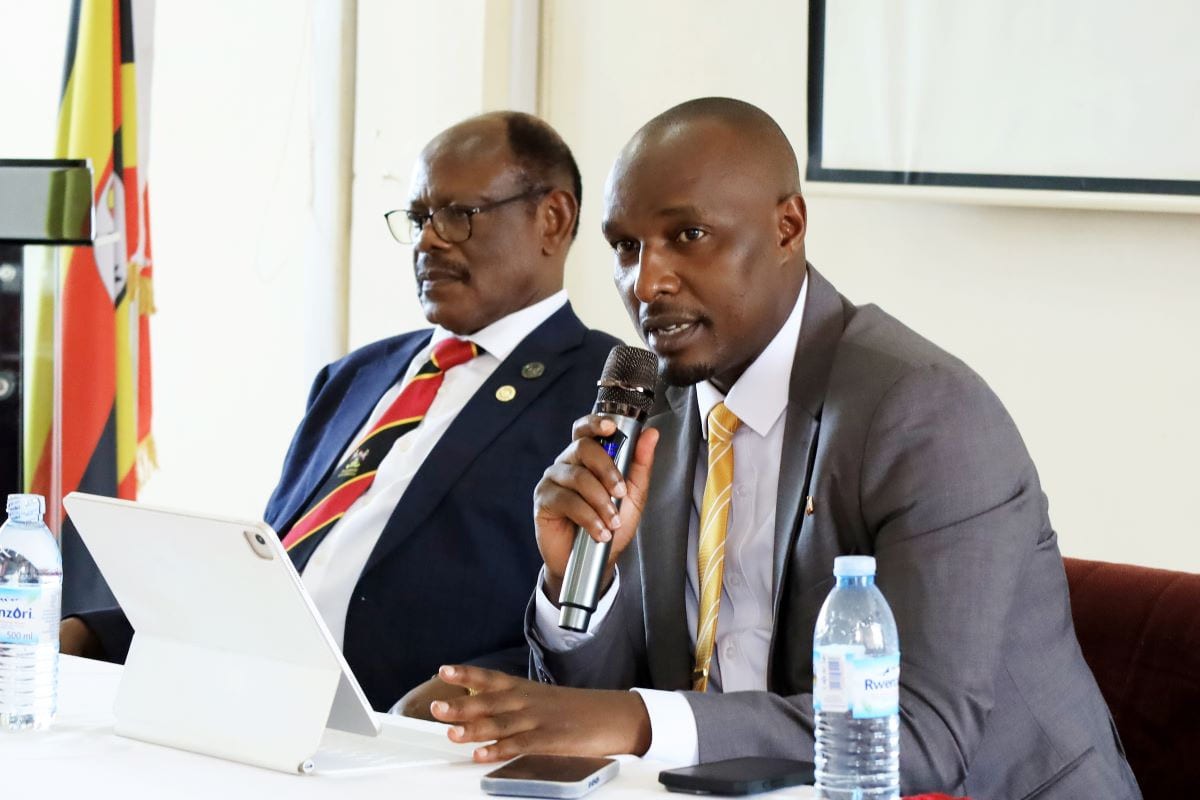
Hon Asiimwe Jornard giving his remarks during the meeting
A related project in AI for education is reaching roughly 33,000 learners in Uganda’s Napak and Lira districts, using AI-supported tools to “teach them comprehension, numeracy, literacy in the local language and English.”
At the AirQo lab, Prof. Engineer Bainomugisha showcased locally designed, low-cost air quality monitors built, assembled and 3D-printed on campus, complete with in-house circuit boards and cellular connectivity. “We are supporting African cities to track the environment where they breathe,” he said, citing World Health Organization data attributing roughly 8.1 million deaths annually to air pollution. He confirmed the devices are already deployed in 16 African cities and that a shipment is being prepared for a client in Côte d’Ivoire.
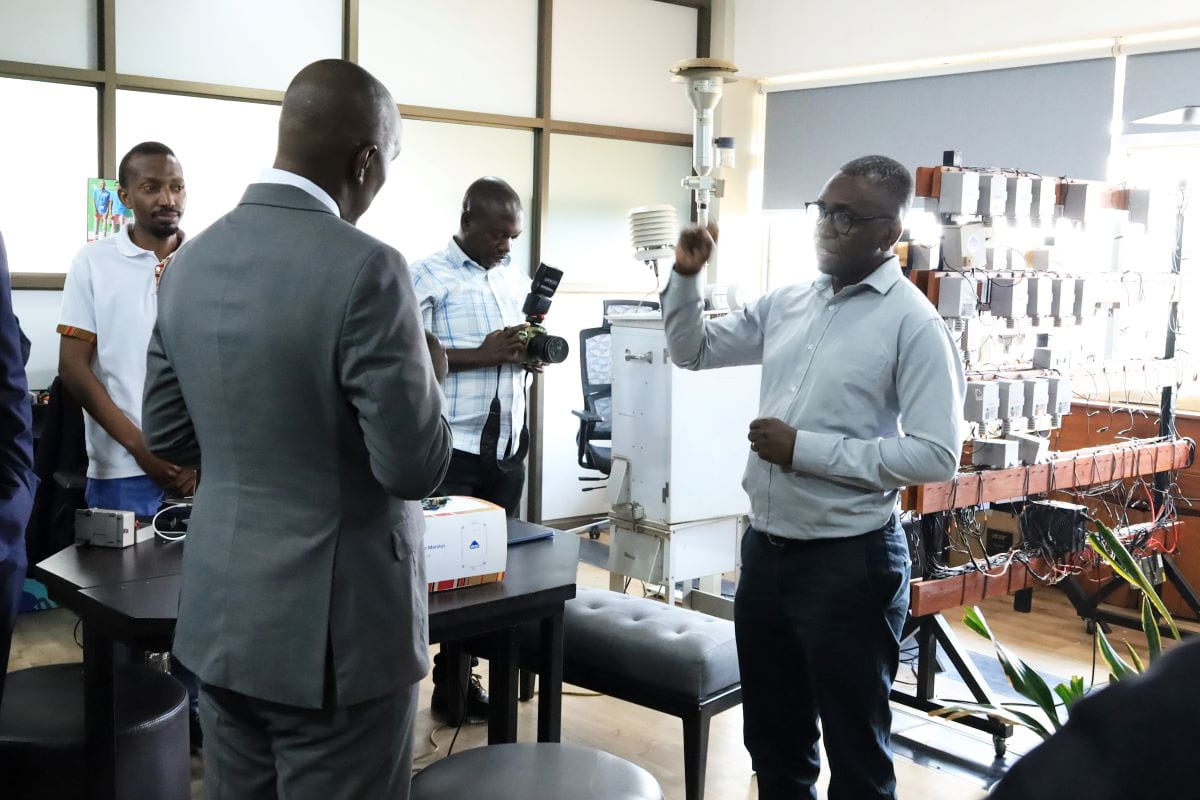
Prof. Engineer Bainomugisha explaining to the minister about AirQo
The final stop was the Makerere AI Health Lab, where Dr. Rose Nakasi unveiled “Ocular,” a 3D-printed smartphone adapter that transforms an ordinary microscope into a digital diagnostic tool for malaria, cancer and tuberculosis. “We have developed a 3D-printable adapter which provides the attachment of the smartphone onto the microscope,” she explained, noting that the tool works even without internet connectivity. Developed with the College of Health Sciences, the innovation addresses a severe shortage of pathologists in Uganda. “We have only 18 pathologists in the whole country,” Dr. Nakasi said. “This allows health workers to capture and share microscope images for AI-assisted analysis, “ she added.
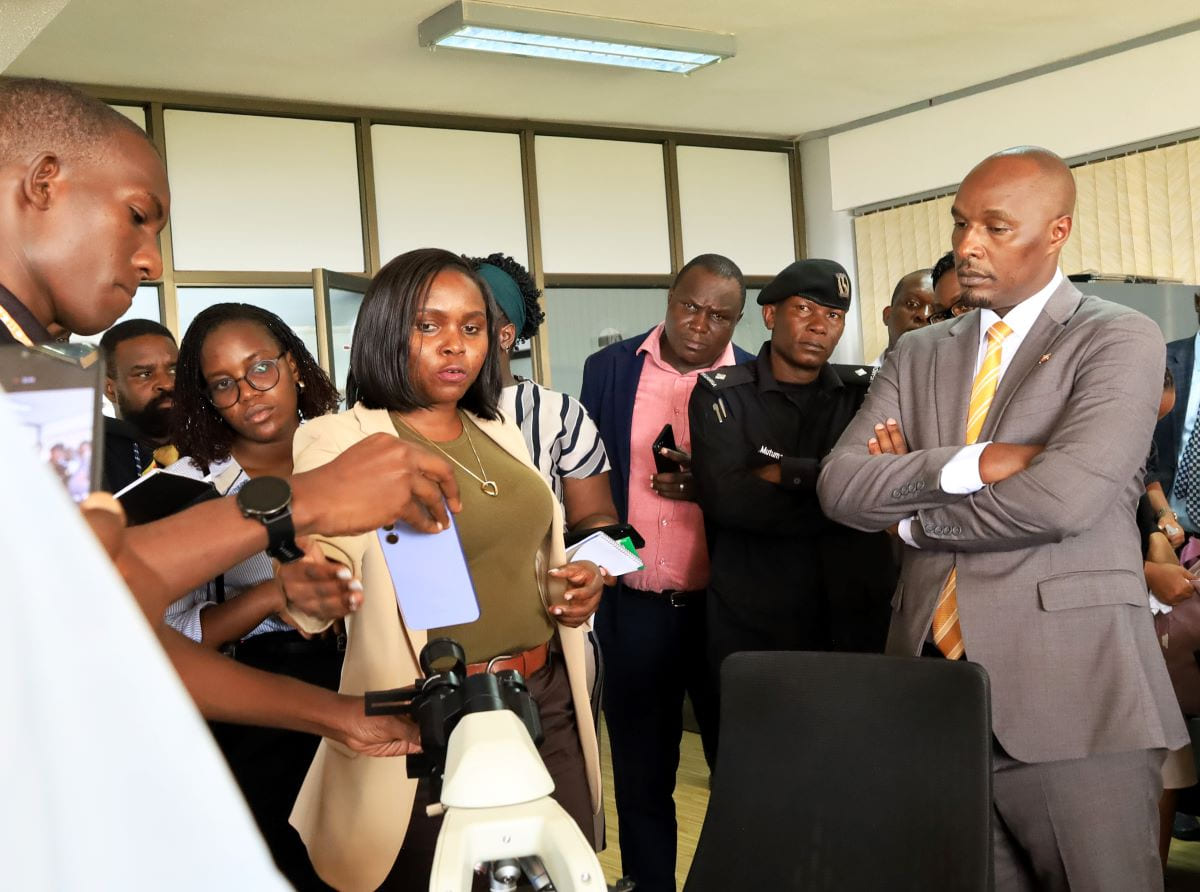
Dr. Rose Nakasi demonstrating how her innovation works
While addressing staff after the tour, the Minister praised the calibre of research on display. “This is a science tour, not a geographical tour,” he said. “I want to also congratulate the team of scientists I’ve seen around.” He commended CoCIS’s roughly 75 PhD-holding faculty members, trained in Nigeria, China, South Korea, Germany, the UK, Sweden and the United States, and noted that the College’s graduates have gone on to work at Google, Facebook and Stanford University.
However, the Minister was candid that admiration alone was not enough. “I’m not as much impressed with how we are using this computing, but we still need to put more energy and create bigger things,” he said, urging the College to move beyond isolated research projects and become a genuine engine for national industrial transformation. He challenged researchers to align their work with Uganda’s four-pronged growth strategy of agro-industrialisation, tourism, mineral development including oil and gas, and science, technology and innovation, which underpins the country’s ambition to build a 500-billion-dollar economy. “Let no one take away your mandate,” he warned.
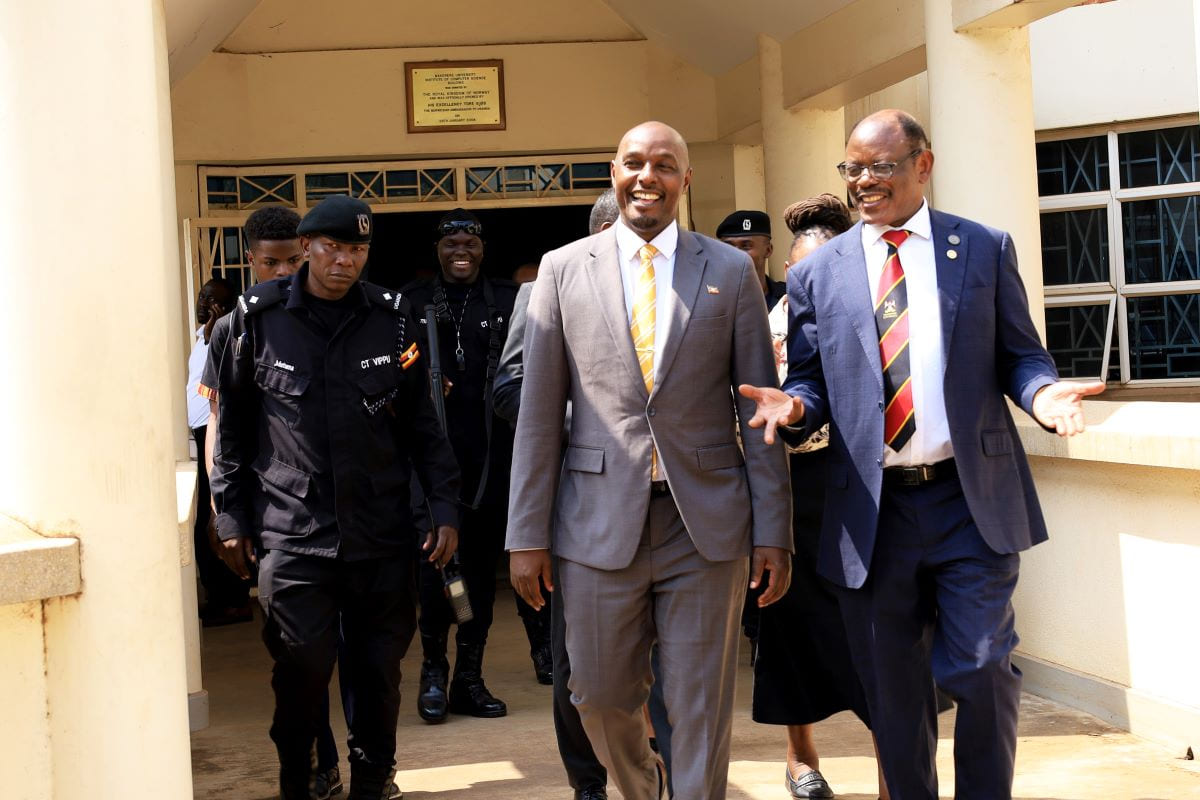
Prof. Barnabas Nawangwe and Hon. Jornard Asiimwe after the meeting
The Minister also pressed the College to safeguard the intellectual and commercial value of its work, referencing government’s policy of prioritising the procurement of locally developed, quality-certified products including diagnostic kits over imports, supported where necessary by tax and non-tax measures. “If my scientists say they have a product and it works, right to me, right to cabinet, and we will direct that entity to buy, to ensure that they provide off-take,” he said, describing the guarantee as a direct incentive for researchers to take prototypes through certification and clinical trials.
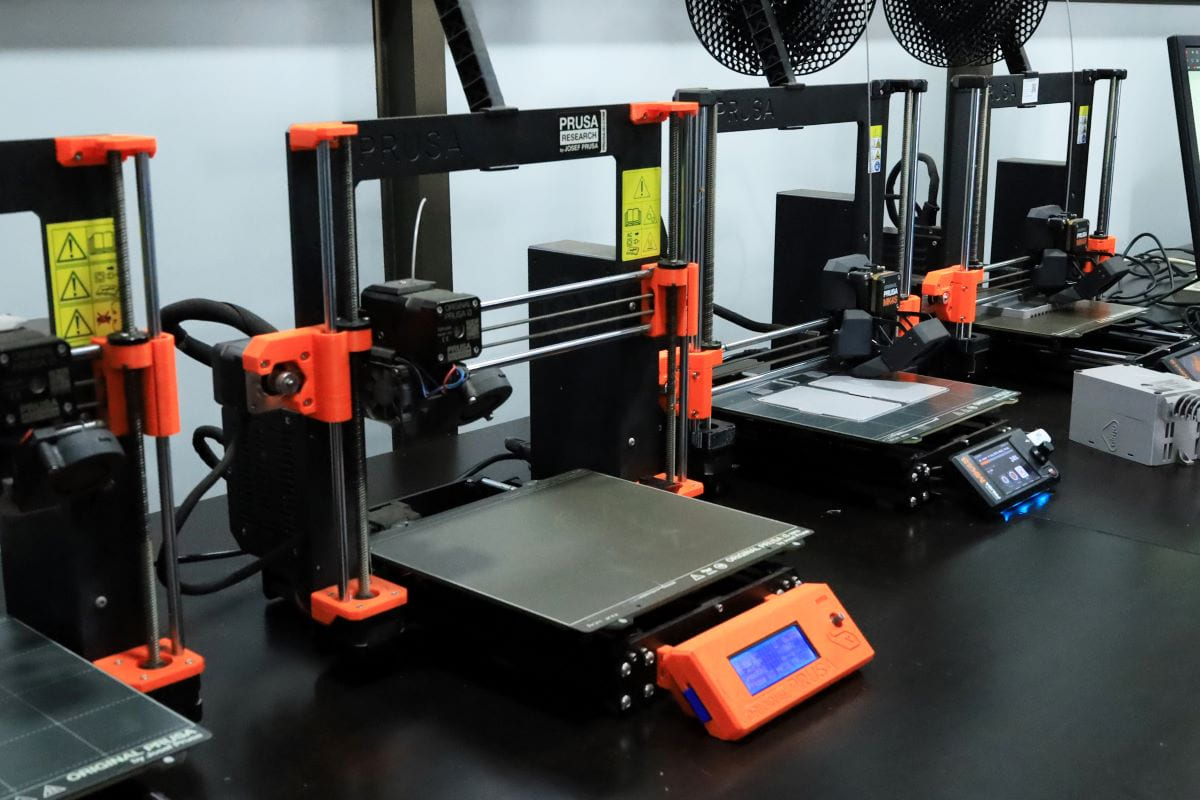
Some of the 3D printers used to print the air quality monitors in the AirQo Lab
In the question-and-answer session that followed, Department of Computer Science Professor Engineer Bainomugisha highlighted “Credit Cloud,” a homegrown computing platform originally built to support student coursework and now ready for scale. “We are ready to move forward in that sense,” he told the Minister, noting that seed funding for the facility had come from a Microsoft co-founder who has personally visited the lab.
Dr. Julianne Sansa-Otim, senior lecturer in the Department of Networks, welcomed the Minister’s visit as a signal of renewed government interest. “I think it also gives me hope that the past challenges we’ve had… are not going to happen anymore,” she said, describing how promising CoCIS-developed solutions have sometimes stalled because the government entities meant to adopt and fund their rollout have been reluctant to pay, leaving citizens without the intended benefits. “What are the available channels to make this known so that the necessary support can be got?” she asked.
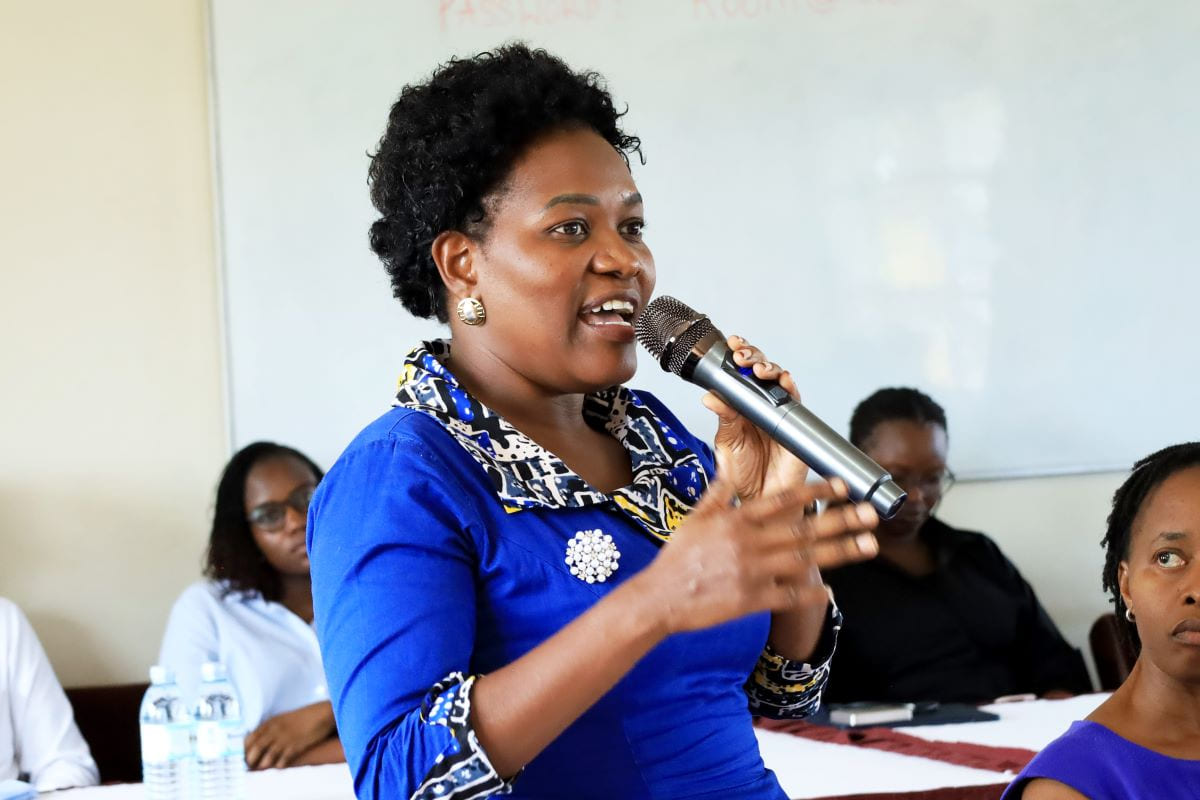
Dr. Julian Sansa Otim, one of the lecturers and innovators at CoCIS asking questions during the meeting
In response, a senior government science advisor, Dr. Cosmas Mwikirize outlined the country’s approach to embedding local innovation into economic growth through import substitution, higher-value exports and productivity gains. “Let us support you to create the confidence, and we will do our part,” the advisor said, reaffirming that verified, market-ready local products would be championed for government off-take at the highest levels.
The Minister called for greater institutional discipline in adopting local products, citing everyday examples of Ugandans favouring imported goods over homegrown alternatives. “If we have discipline, the way we manage the game of products, that one alone can bring” significant national value, he said, pressing the college to view itself not merely as an academic department but as a driver of economic self-sufficiency. He invited CoCIS leadership to a follow-up planning meeting to map out a shared roadmap. “We look forward to working with you now,” he told the gathering.
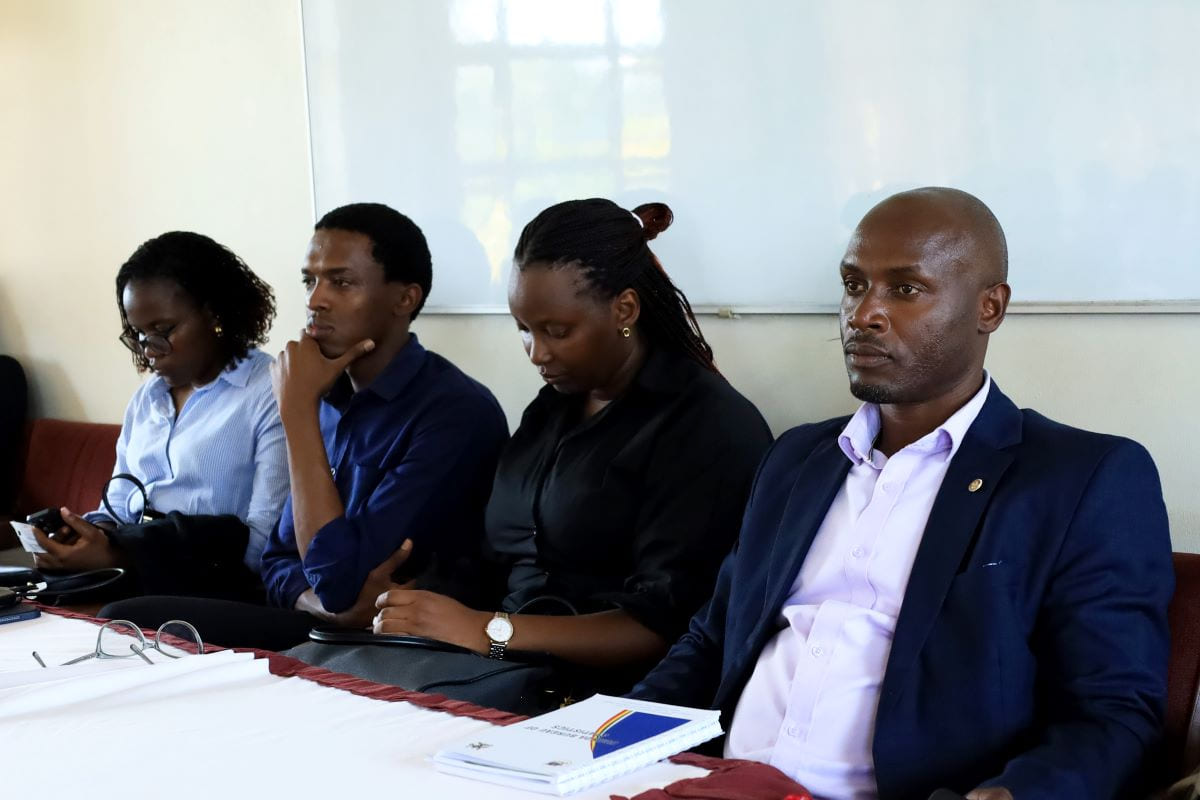
Some of the staff members listening in during the meeting
The visit closed on a note of shared optimism, with both the Minister and the CoCIS leadership committing to deeper collaboration to ensure that Uganda’s next generation of scientists and engineers can turn world-class research into homegrown industry.